

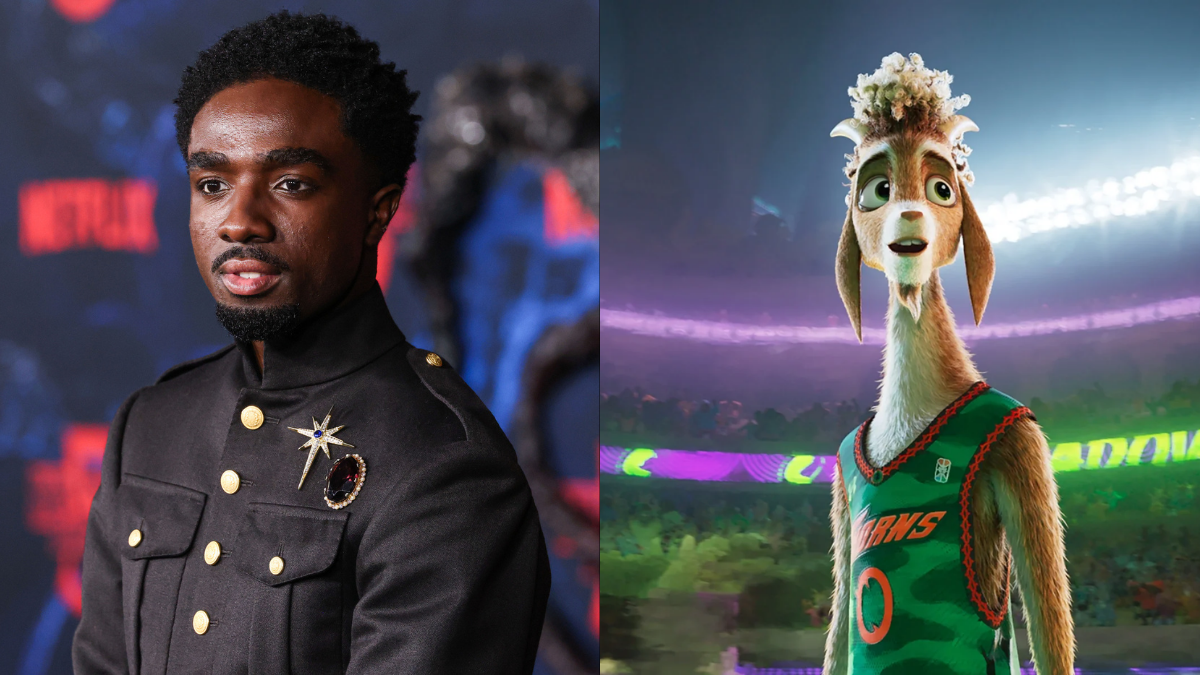
Caleb McLaughlin isn’t slowing down after the finale of Stranger Things; he’s simply switching gears and expanding his range in a major way. The actor, best known for his breakout role as Lucas Sinclair on Netflix’s hit series, is now set to lead the voice cast of GOAT, a 2026 animated sports comedy from Sony Pictures Animation.
Scheduled to hit theaters February 13, GOAT follows the story of Will Harris (McLaughlin), a small goat with big dreams who fights to become the greatest of all time in a high-intensity, all-animal sport called roarball.
While McLaughlin voices the determined young goat, the animated film features a standout ensemble cast, including Stephen Curry, who also produces, as Lenny Williamson, a giraffe roarball player, and Gabrielle Union as Jett Fillmore, a star player and mentor figure in the story. Other notable voices include Nicola Coughlan, Nick Kroll, David Harbour, Jenifer Lewis, and more.
GOAT is more than a kid-focused comedy; it’s a story about resilience, ambition, and believing in yourself even when the odds seem stacked against you.
While Stranger Things introduced McLaughlin to global audiences and established him as a compelling young talent with range and depth, GOAT represents his first major role in a feature animated film and a chance to anchor a family-friendly project with big laughs and a big heart.
Check out the trailer below.
As McLaughlin transitions from Hawkins to the animated roarball world of GOAT, audiences have a new reason to cheer: his impressive evolution as an actor — and his ability to take on projects that surprise, inspire, and delight. With GOAT scheduled for a 2026 release timed with the NBA All-Star weekend, it’s shaping up to be a major moment in McLaughlin’s post-Stranger Things journey. Wikipedia