

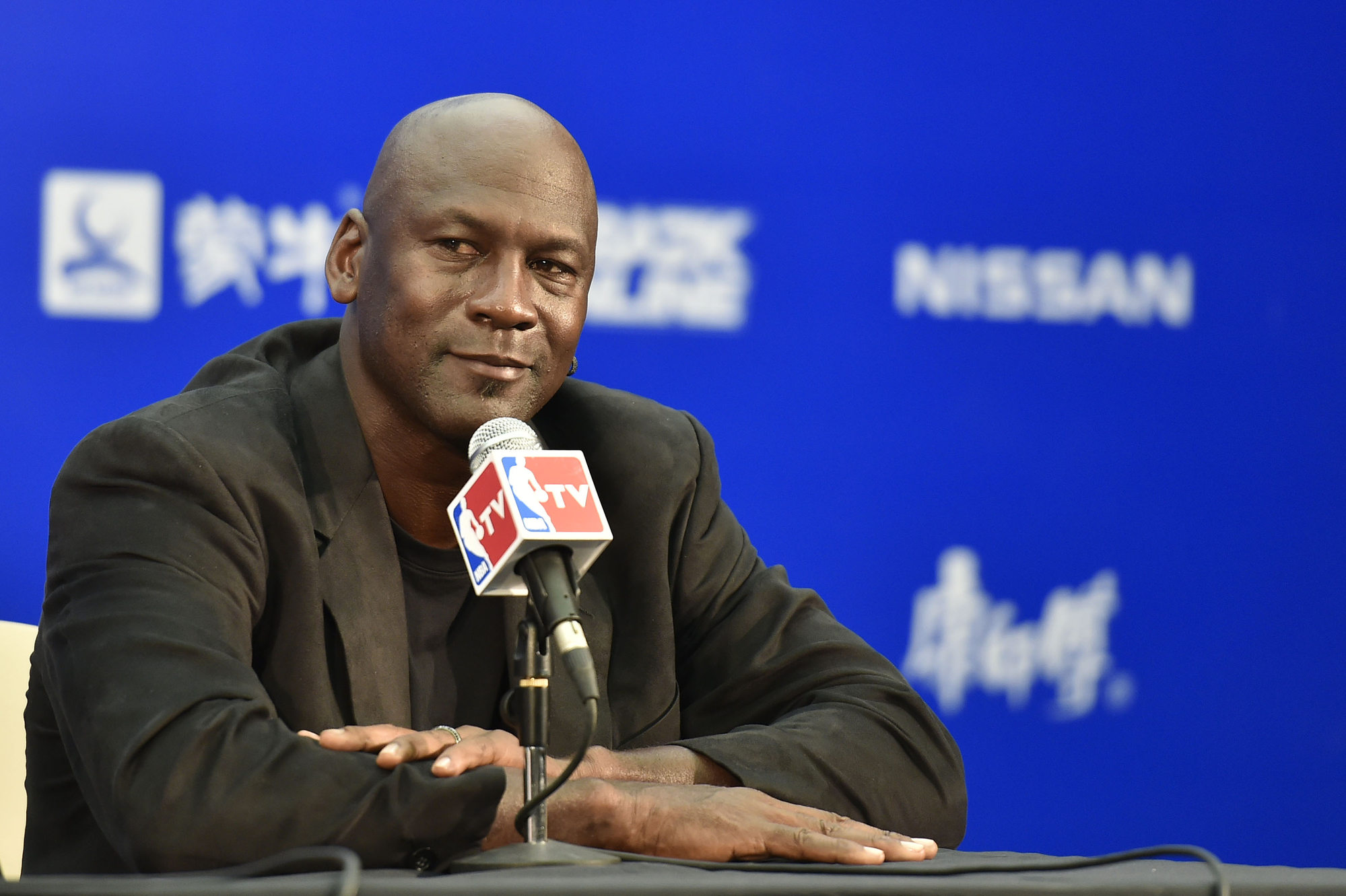
Michael Jordan has never been a stranger to competition. But this time, the battle isn’t on hardwood, it’s in the courtroom.
The NBA legend and co-owner of the NASCAR team 23XI is taking on one of the most powerful institutions in American sports. And according to Jordan, the lawsuit isn’t about personal gain, it’s about the future of the sport.
On Friday, Jordan testified in his antitrust lawsuit against NASCAR, opening up about why he decided to challenge the organization he grew up admiring.
“Someone had to step forward and challenge the entity to understand that it is a real concern from our aspect,” Jordan said. “I felt I could challenge NASCAR as a whole. I felt, as far as the sport, it needed to be looked at from a different view.”
For a man known for dominating the status quo throughout his NBA career, it’s no surprise he’s not afraid to disrupt structure when something isn’t working.
To understand this lawsuit, you have to understand charters. Charters in NASCAR function like franchises in other sports, guaranteeing each chartered car a spot in every race, consistent revenue, and a built-in financial outlook for the season.
The charter system was created in 2016, intended to provide teams with a more stable business model. But that stability has always been temporary; NASCAR has the power to extend or pull charters.
After two years of negotiations, teams were pushing hard for one thing: make the charters permanent. Without permanence, teams face uncertainty, volatile cash flow, and unknown futures, the exact opposite of what every other major sports league offers its franchises.
When NASCAR refused, Jordan and 23XI said the organization was playing too much of a monopolistic game.
In September 2024, NASCAR gave teams just six hours to sign a 112-page contract extension or face losing their charters.
That ultimatum led to chaos.
Jordan’s 23XI and Bob Jenkins’ Front Row Racing were the only teams out of 15 that refused to sign. Instead, they filed an antitrust lawsuit, claiming NASCAR leveraged monopolistic power and ignored the long-term financial health of teams.
Jordan testified that despite the uncertainty, 23XI still bought a third charter late in 2024 for a massive $28 million. The team has already invested an estimated $35 million to $40 million since launching in 2021. Jenkins testified that he’s lost nearly $100 million since entering NASCAR.
These are not numbers born of impulse. They’re investments rooted in belief, belief that NASCAR can grow into a larger, more accessible, globally meaningful sport.
But for Jordan, growth requires reform.
The superstar made the argument that if someone with his platform doesn’t challenge the structure, the sport won’t evolve.
Jordan sees the big picture. A healthier NASCAR can attract better sponsors, stronger talent, larger audiences, and long-term sustainability. Without financial certainty, many teams operate at a loss, struggle to invest in talent, or can’t compete at meaningful levels.
This lawsuit isn’t a greedy grab; it’s a push to modernize the business.
The trial is ongoing, but the implications are high. If 23XI wins, charters could become permanent, teams could finally operate with long-term financial security, and NASCAR may be forced to rethink its power structure.
If Jordan and Jenkins lose, the status quo returns, teams remain dependent on NASCAR’s control, and many may continue to operate in financial jeopardy. Jordan’s intent is clear — he’s not attacking NASCAR, he’s trying to preserve it.
Photo Credit: DepositPhotos.com