

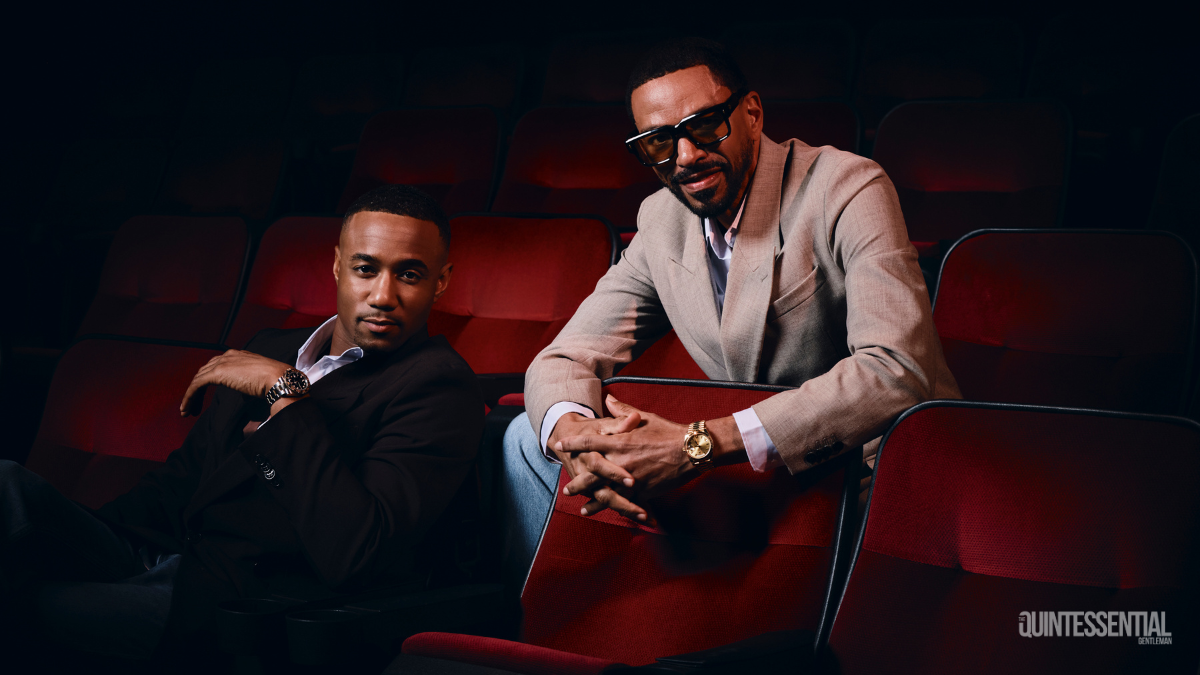
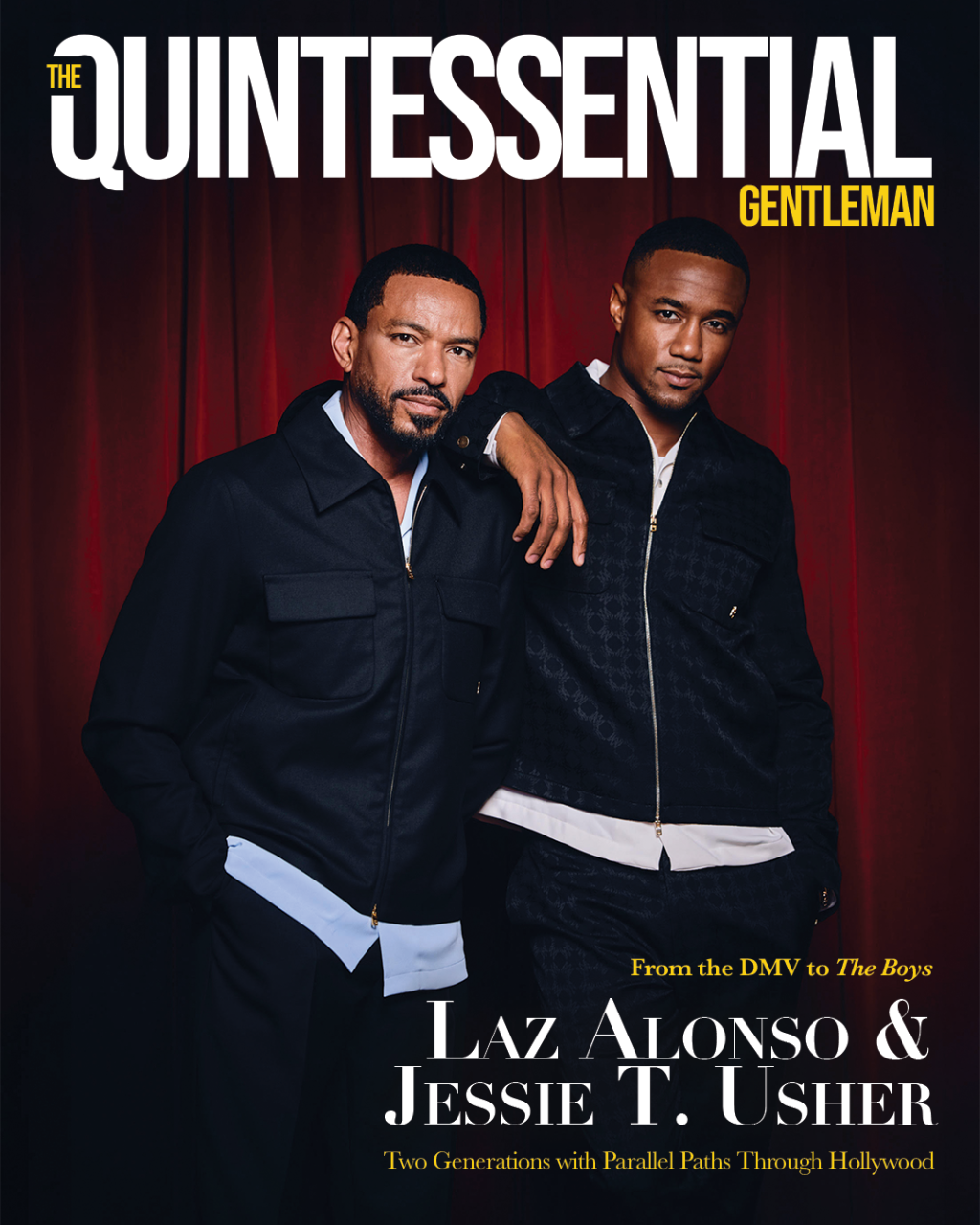
There is a particular kind of kinship that forms between two men who have walked similar roads without ever knowing the other was on the same path. Laz Alonso and Jessie T. Usher didn’t grow up together. They didn’t come up in Hollywood at the same time.
Nearly two decades separate them. And yet, if you map their journeys, the neighborhoods, the academic ambition, the unlikely detours before the camera, the holiday films, the franchise roles, the grinding years of television, you begin to see something: two men running parallel lines that were always going to intersect.
They both come from the DMV, which raised them with the particular swagger and sharpness that only that part of the country provides.
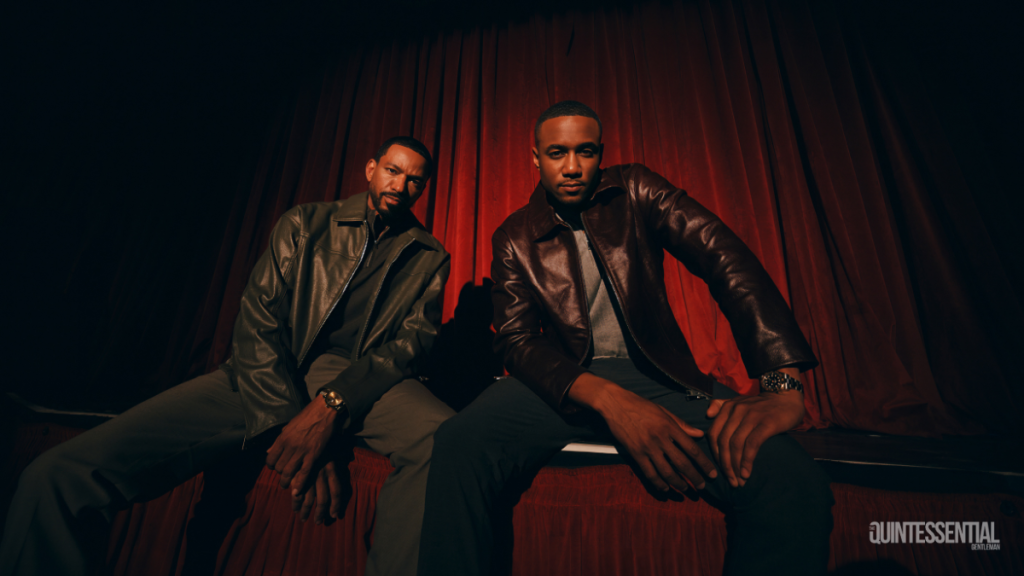
Alonso, born in Washington, D.C., is a Cuban-American who grew up in the duality of cultures, earning a BBA in Marketing from the halls of Howard University. Usher, born in Silver Spring, Maryland, arrived in this world with a different kind of fire, finishing high school at 15, enrolling in a California community college where he studied culinary arts.
Neither of them took the obvious road to Hollywood. Alonso didn’t walk off the Howard University stage and into a casting office. He walked onto Wall Street, taking a position as an investment banker at Merrill Lynch. It was a strategic decision, not one of passion. New York was where the theater was, and Wall Street would finance the move.
Usher, meanwhile, was hustling through childhood auditions and Oscar Mayer commercials, learning the industry before most kids his age had finished middle school.
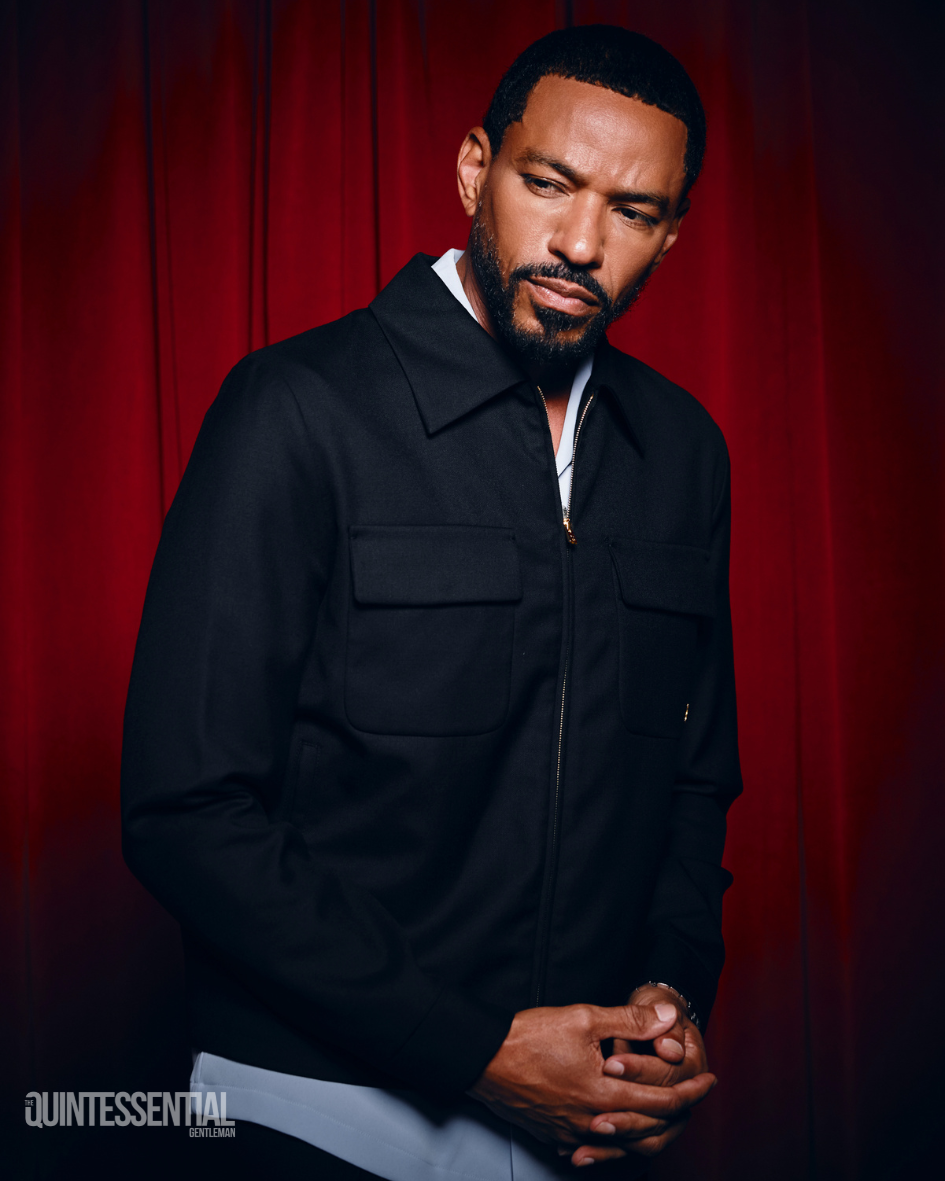
Outfit: Amiri
Both men were building something: discipline, perspective, and a refusal to be put in a box.
Alonso has spoken about what Wall Street taught him: that money, in the absence of meaning, is a hollow reward. He watched people making fortunes and recognized the quiet misery underneath. He left. Usher’s early acceleration taught him something different but complementary: focus in the face of chaos and the ability to tune out noise that would paralyze most.
By the mid-2000s, Alonso had solidified his presence on the big screen, becoming a recognizable face through back-to-back cultural hits. While he first was seen in the world of Black Greek culture with Stomp the Yard (2007), which debuted at No. 1 at the box office, he proved his versatility later that year in the holiday ensemble This Christmas. In that Black family drama, he took on the role of Malcolm, a man the audience was meant to despise before the credits rolled.
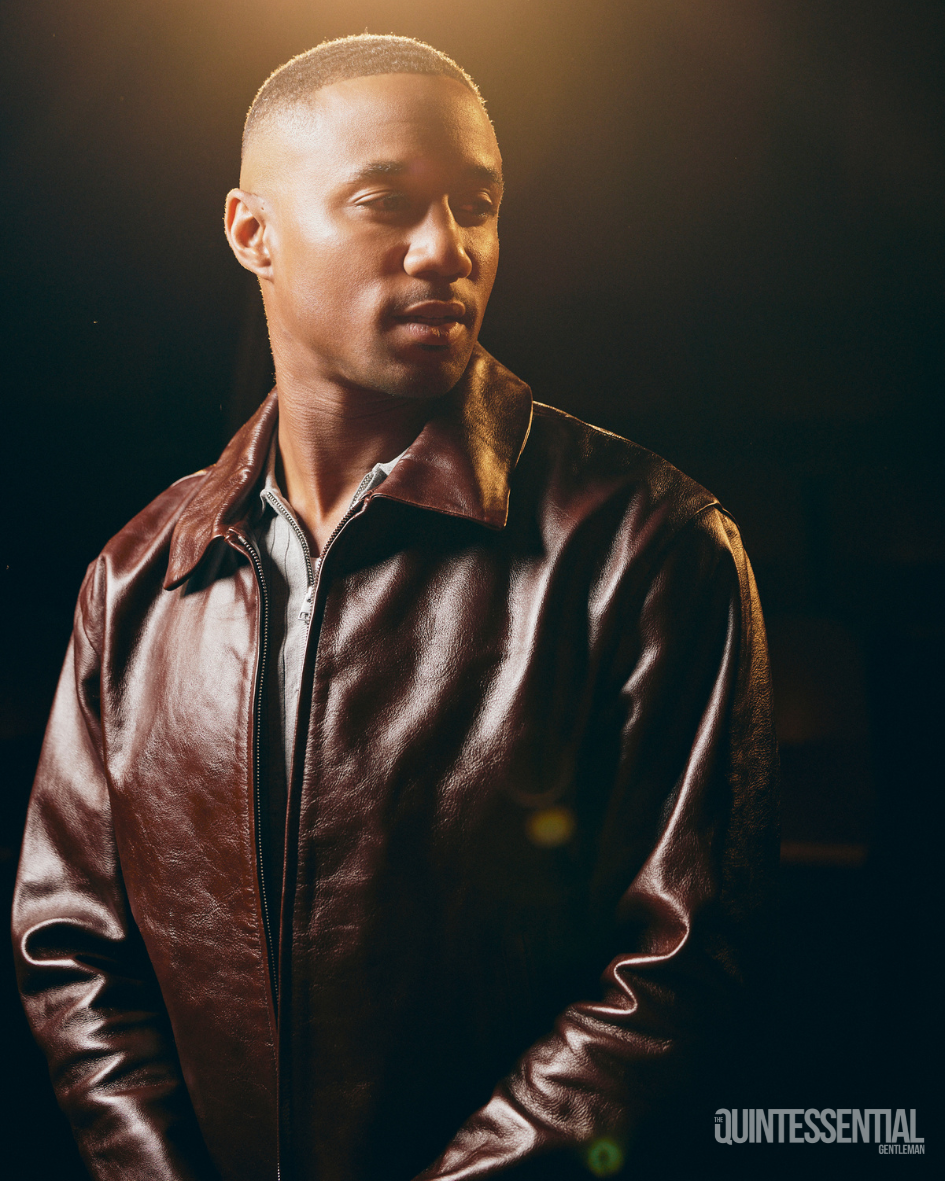
Outfit: Sandro
Nearly a decade later, Usher would find himself in a similar orbit. In the holiday comedy-drama, Almost Christmas (2016), he stepped into the role of Evan, the youngest of the siblings who serves as the emotional heart of the family as he grapples with the loss of their matriarch.
Besides those holiday films, both men took on franchise roles that announced them as leading men in the action-adventure space. Alonso stepped into the world of Avatar (2009) as Tsu’tey. Usher suited up for Independence Day: Resurgence (2016).
Both films were spectacles, massive, expensive, loud. And in both, these two men held the screen.
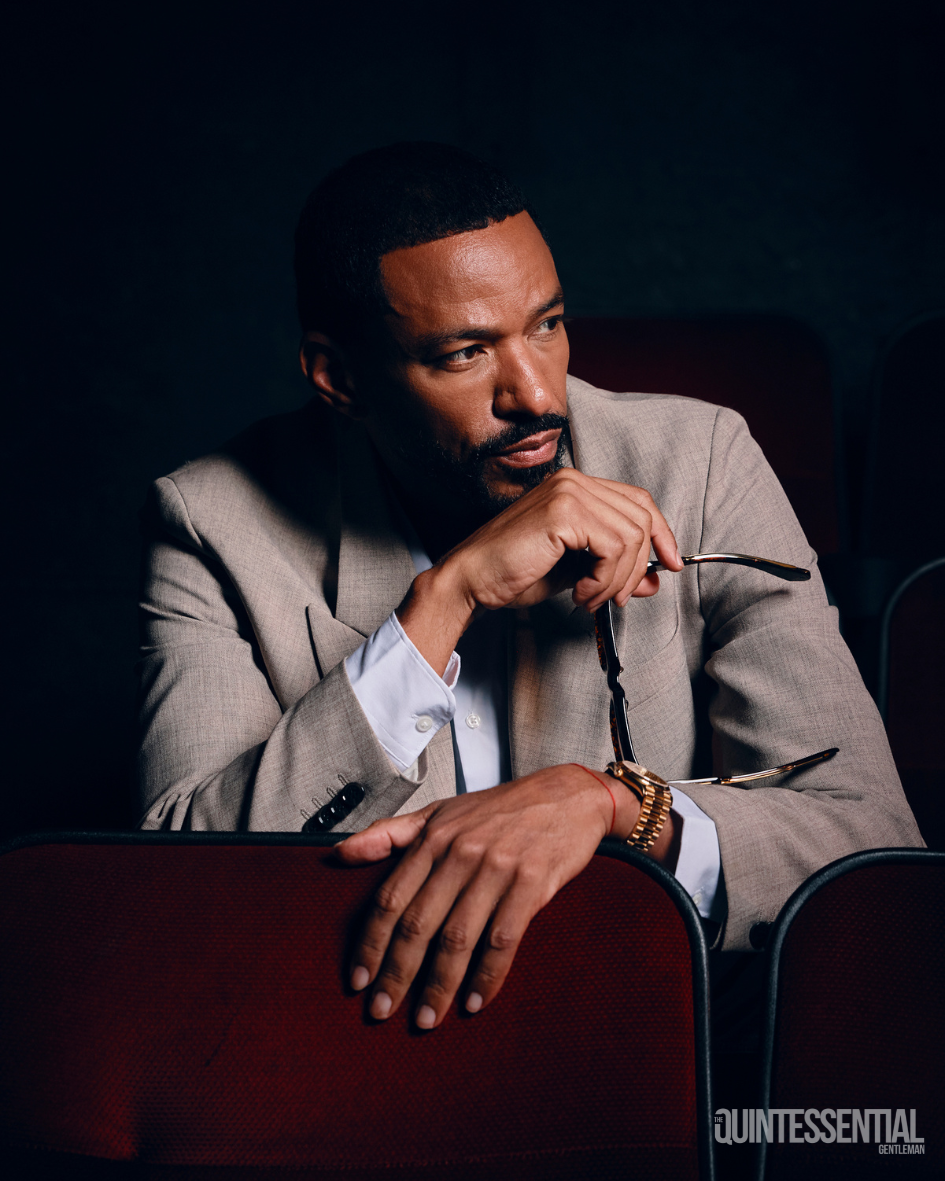
Outfit: H&M Runway
But it is television where the longer story gets told. Usher, before The Boys, spent four seasons on Survivor’s Remorse (2014–2017), the Starz drama that deserved every accolade it received and not enough of the ones it didn’t. It was the kind of show that demanded authenticity about Black success, about family, about the complicated weight of being the one who makes it out.
Alonso’s journey to a long-form TV commitment followed a different path. He’d finished the film sprint, but he lacked a certain creative fuel, that sense that the work was landing somewhere meaningful. So, he made a choice: he stopped auditioning for things he didn’t believe in.
And then The Boys came.
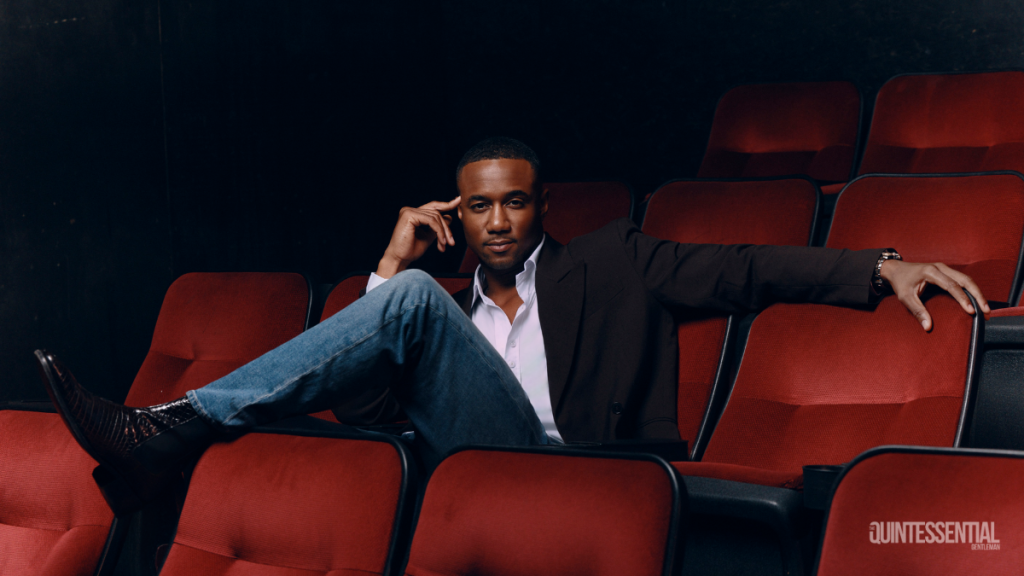
Outfit: H&M Runway
Prime Video’s The Boys arrived in the summer of 2019 as something genuinely new, a superhero show that had the gall to treat superheroes as products of capitalism, trauma, and corruption. It was sharp, violent, funny in the darkest register, and built on performances that had to anchor all that chaos with something real. Marvin T. “Mother’s Milk” and A-Train needed to be human at the center of the inhuman.
Alonso and Usher have been there since season one. And now, at the close of the series’ final season, with the season finale premiering Wednesday, May 20, marking the end of the series, they sit across from each other in a conversation that has the ease of men who have been in the same foxhole for years, finishing each other’s thoughts, challenging each other’s memories, laughing at the absurdity of where they both ended up.
It’s a conversation about their journey, their characters, discipline, serendipity, and what it means to be a Black man carrying a story on your shoulders in an industry still learning how to make room.
What follows is that conversation, in their own words.
Laz Alonso & Jessie T. Usher in conversation [Interview has been edited for length and clarity]
Laz Alonso: One thing I didn’t know about you was that you were a genius. You graduated high school at 15. How were you able to take that level of focus and apply it to such an unfocused business like Hollywood?
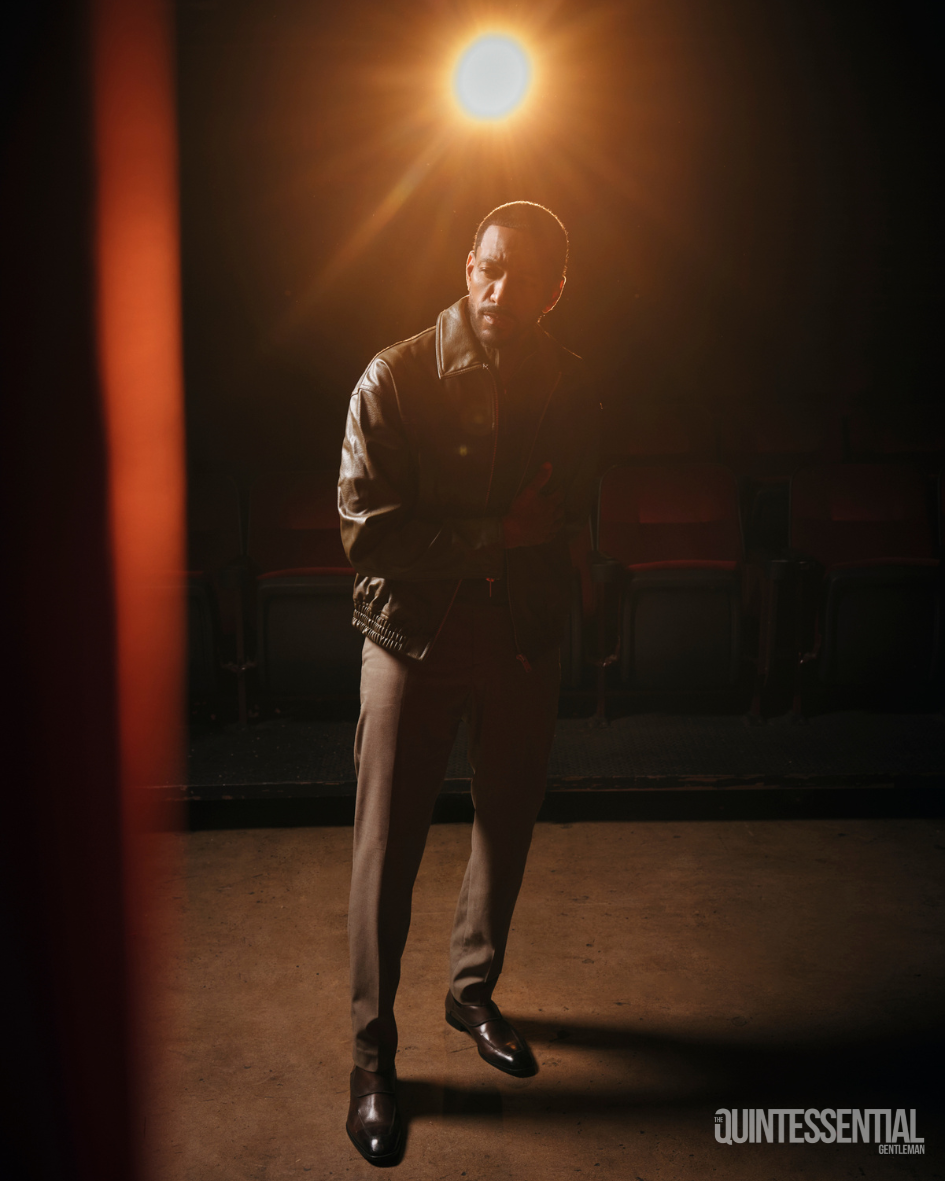
Outfit: H&M Runway
Jessie T. Usher: Honestly, I feel like they go hand in hand. I only really locked in like that because of this business. You reach that point as a child actor where they’re like you’re up against actors who are over 18 who have graduated high school naturally. The productions will hire the people that are easier to work with. You can have longer hours, so on and so forth. It’s less expensive to work with someone who’s already graduated high school. So I pushed myself. My family helped navigate this thing so I could take on a larger workload and finish school earlier so I could go for bigger roles.
Laz Alonso: I went a more roundabout way. When I graduated from Howard, I went to Wall Street. My logic was…I wanted to do theater in New York first, but I couldn’t afford to move to New York. So I said, if I get a job on Wall Street, they’ll pay for my move. And then I can do my theater and my acting on the weekends. And that’s what I did. I financed my own move. I could have quit the next day, but I still did my time.
I realized…these people making all this money are unhappy. Very early in life, I realized that money was not going to make me happy. It was doing what I actually wanted to do. I’m happy I had that experience, because I learned that money ain’t the answer to everything.
Laz Alonso: You’ve done the Hollywood sprint, Shaft, Independence Day, huge properties in film. But you’ve also run the marathon. Survivor’s Remorse. And now The Boys, eight years on the show. Between sprinting in film and marathoning in TV, what’s your preference as an actor?
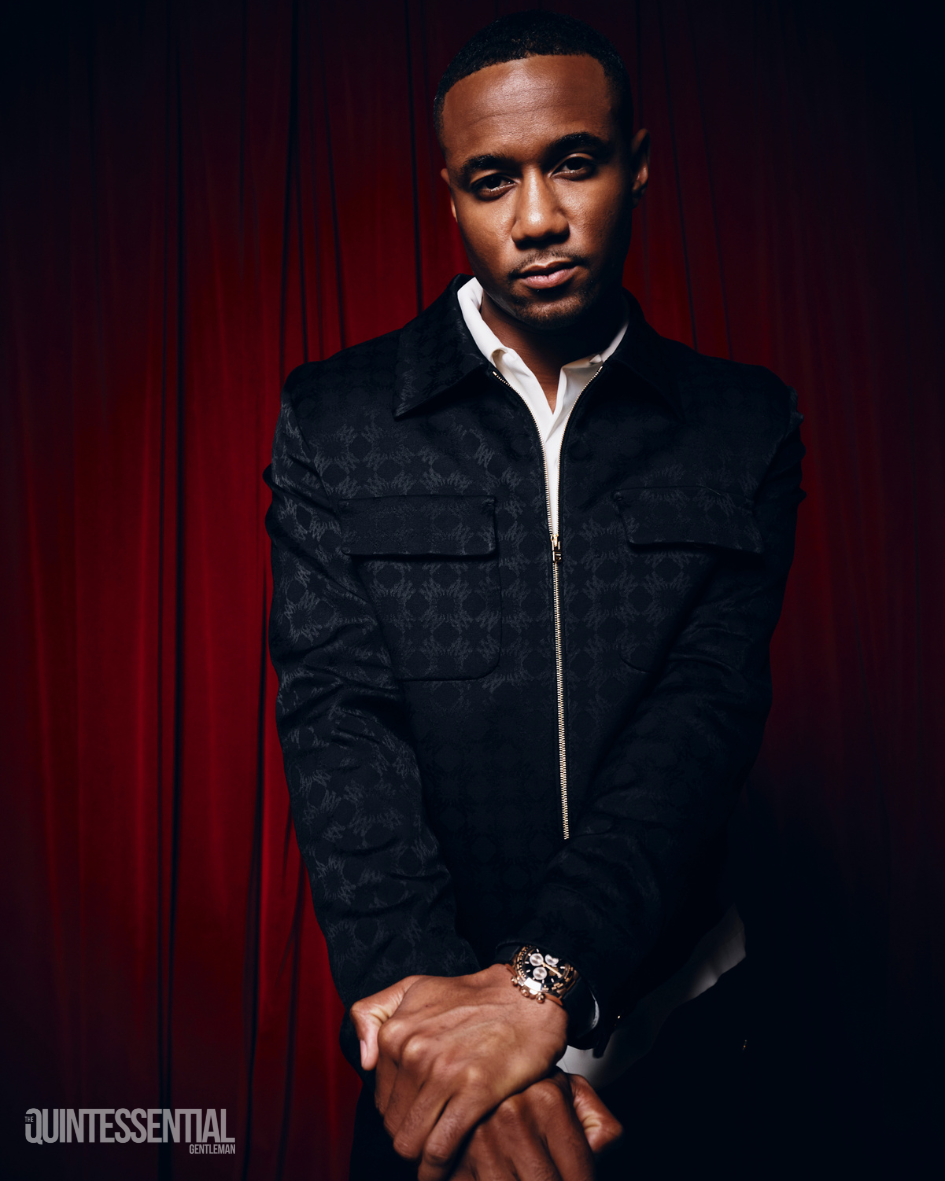
Outfit: Amiri
Jessie T. Usher: I think the most beautiful thing about this business is being able to balance back and forth. Being able to sprint sometimes and then also slow the pace down and do a marathon of a television series, having the ability to go back and forth is the thing I’ve enjoyed most. With A-Train, it was eight years of developing this character. You just don’t get a chance to do that in film. You sort of meet the character right where they’re at, you take them where they’re going, and you drop them right off, in three months. With TV, when you spend a lot of time with a character, it becomes personal in a way that I don’t think film can achieve.
Do you have a preference?
Laz Alonso: Prior to this experience on The Boys, I would have said film was my preference. Film has been what’s given me the most opportunities to shine. I’ve had characters people hated, like Malcolm in This Christmas, where I was cheating on Regina King‘s character and I got my butt whipped. Everybody applauded. But now, with Mother’s Milk, I’ve had eight years. Being able to simmer. Play a different face, a different energy every year, a different trauma, a different story to tell of the same character. I would really enjoy that storytelling process. And working on a show like The Boys, where every episode is like a mini feature film, it feels like you’re doing a movie every single season.
Jessie T. Usher: Take me back to the beginning when you first read the script for The Boys. What were your initial thoughts?
Laz Alonso: When I first read the script for The Boys, I knew I was going to book this role. I had gone through a period in my career where I said I’m not going to audition for anything else that I wouldn’t die to watch week in and week out. I got to the point where I was on a show that was a 9-to-5. My heart wasn’t in it. My soul wasn’t in it. And it’s funny because I had a very similar feeling to when I was on Wall Street, I realized all money ain’t good money. When I read this script…I saw me right there. I went in with that confidence. I went in with that energy.
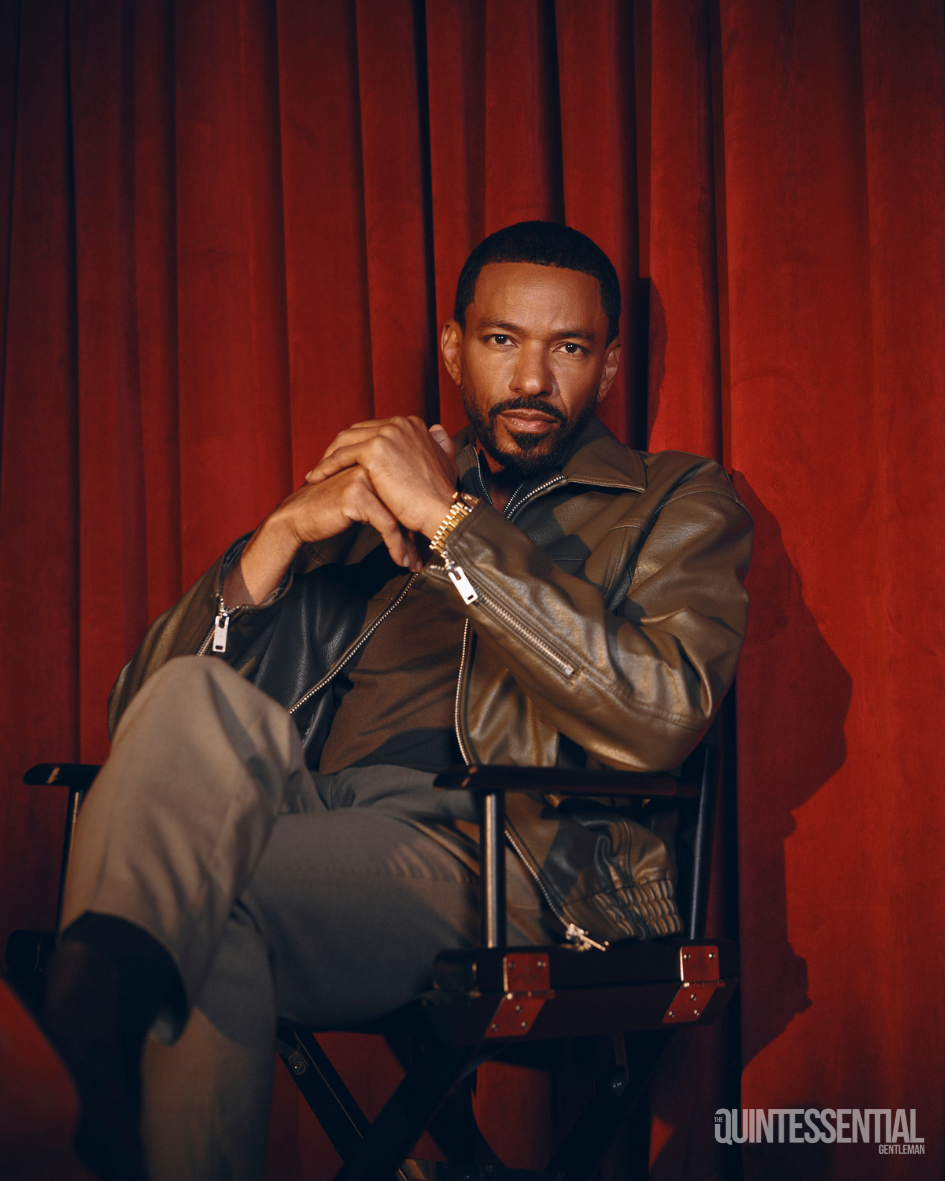
Jessie T. Usher: Very different process for me. This came in at a very busy time. I was in the middle of shooting Shaft when this arrived. Everyone on my team knew this was going to be a big project, so they downplayed it. “Oh, this audition, if you got some time, put it on tape.” And I’m looking at my week and all my scenes are with Samuel L. Jackson. Just me and him. There is absolutely no way I’m about to dedicate five minutes to anything else. If I’m unprepared, if I ain’t got enough sleep, he’s going to chew me up. I told them, guys, “I’m sorry, but I don’t have time to do this.”
Eventually, Eric Kripke, the creator of The Boys, somehow got in contact with John Davis, the producer of Shaft. He called him up, playfully, said, “Why aren’t you giving your actors enough time to prepare a tape?” John comes to me at lunch: “My good friend Eric called me. He wants a tape from you on something.” I left that night and started practicing the tape. My parents were in town with me. And I was just running the scene with them. I was running the Shaft scenes, then The Boys scenes, back and forth. It was 11 p.m. I put the tape down. Didn’t feel good about it. Woke up the next day with a nasty attitude, “That tape sucked. We’re shooting another one. Fifteen minutes before the van gets here.” I had that attitude in the scene where A-Train is talking about running through Robin, dismissive, disgusted. Eric called immediately: “This is amazing. He’s so attitude. I didn’t expect him to have this disgust in his voice.” And that’s what we built A-Train on, you hear him talk and he should be apologetic, but he’s almost disgusted that this person even existed in the world.
Laz Alonso: One thing I can admittedly say I’m a little jealous of, I’ve been on a superhero show for eight years, and I’m not a superhero. How does it feel to be in that genre, in that suit, when there are not many people that look like us wearing it?
Jessie T. Usher: Honestly, it’s a dream come true. Younger Jesse used to dress up like a Power Ranger, still sitting back in Maryland watching, that’s kind of how it feels. The things I didn’t even think would be married into this career have turned the machine over in a way I never saw possible. I was doing Drama series, Without a Trace, Numbers, Criminal Minds, and the other side of my life was just stuff I watched that I loved. I never thought they’d be married together in a way where I’m wearing the suit and doing that type of performance in the suit. It really does feel like a dream come true.
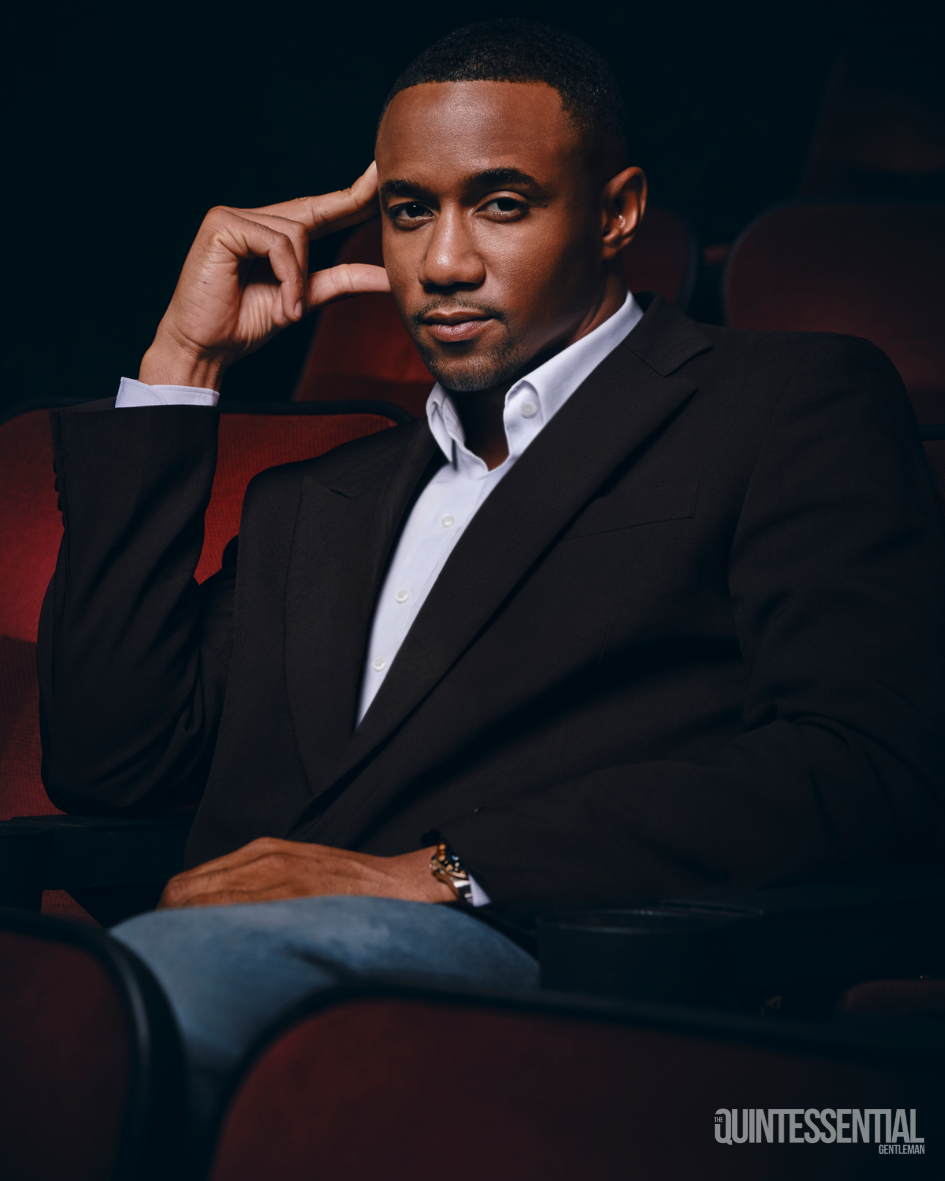
Laz Alonso: I did treat Mother’s Milk in my head like he had powers, even though he didn’t. I moved with that energy, with that intention. And I feel like, for me, with my character, I felt like A-Train had all the power, but inside he feels powerless. I’m coming into a scene feeling like I can’t handle a human, and you’re coming in feeling like you could handle a supe. I feel like we met in such an interesting place on camera, every time our characters crossed paths.
Jessie T. Usher: MM is the heart of the team, still flawed and complex, but immensely powerful. How do you go about playing a character that carries that much internal weight?
Laz Alonso: I felt like it was important for him to be more than just Mother’s Milk. I felt like Mother’s Milk should represent a good Black man. A strong Black man. A strong Black father to a girl. Something I am in real life. That was always my North Star: I’m representing more than just myself. How can I perform in a way that will highlight and show Black men in the best light possible?
MM was a brother from the hood. From 125th Street. The Boys takes place in New York, and out of the whole team, he was the only New Yorker. Butcher’s from the UK. Kimiko’s from Asia. Frenchie, obviously, from France. Huey is from somewhere in the Midwest. So I felt like I had a lot on my shoulders. We came up with the hip-hop themed T-shirts just to ground him more in New York. I gave him that thick New York accent to make him a true New Yorker.
It felt important to always show strength, that regardless of who’s in the room, he’s going to be a force to be reckoned with, whether through physicality or intelligence. A lot of times, it wasn’t on the page. It was something I would figure out on the day or pitch to Eric before we shot the scene.
Laz Alonso: A-Train has had one of the craziest and one of the most beautiful arcs I have witnessed in any character on any series. How did you navigate that? Because it’s a masterpiece, what you and Eric [Kripke] and the writers pieced together from season one to now.
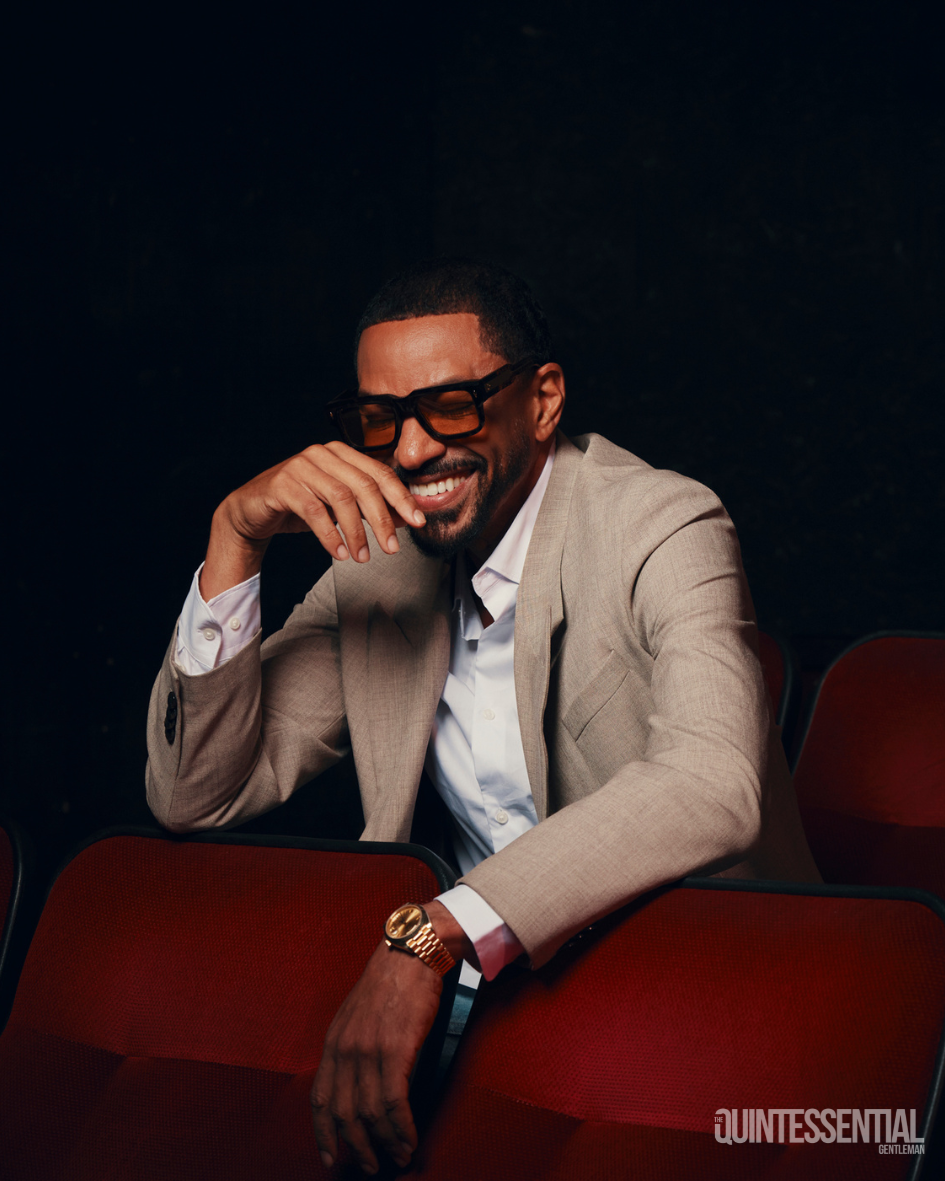
Jessie T. Usher: I can take no credit for the navigation. Every moment that A-Train is placed in, every turning point, I’m only really trying to have an honest moment right then and there. I’m never thinking about where it’s going to take him afterwards. It’s just about that one moment.
Eric [Kripke] would come to set or call me and say, “Remember when this happened and that happened and now it’s this?” And I’m just thinking about this one moment. Now looking back from season five all the way to season one, even I’m like, I didn’t see that. I didn’t see the character I was playing in season one ever being selfless. But that’s why it worked. I wasn’t thinking, “I need to get to that place.” I was just being honest. I was selfish because I hated who I was. That’s my reality. This is what I need you to believe.
You do that over and over again, and there’s only been one time I felt an actual turn, that scene we had in your apartment. That was the only time I was saying words and remembering beats from the past and going, “Oh my gosh, when did that become important?” Saying those things to you, having you look back at me… I hadn’t realized it had been building. So I can’t take credit for the journey. It just feels like you keep your head down and you’re just running.
Jessie T. Usher: Now that the show is wrapped. I want to know, from your perspective, what was the most difficult part about letting go of this whole process?
Laz Alonso: I haven’t totally let go yet.
Jessie T. Usher: Me neither.
Laz Alonso: I think until the show completely wraps, we’re still in this ecosystem. Y’all still feel like a family. We’re still on the group chats. We’re still there for each other. There’s still more story to tell. I can’t say that I completely let go, but I will say that there is a certain level of satisfaction being able to tell the story you wanted to tell and go out on your terms. This is my first time in a TV series getting to this level where you get to finish what you started. You don’t get canceled. You don’t get, “We didn’t order the back nine.” It does feel good to be able to finish something so powerful and meaningful, the way you want to finish it.
Jessie T. Usher: But as you said, there’s just more story to tell. I mean, my character is dead, and I still don’t feel like I’ve completely let go of him yet. There’s still more story. There’s still more impact.
Laz Alonso: There are fan conspiracies that Marie Moreau brings you back to life.
Jessie T. Usher: Anything is possible. We’ll see what happens when the show is said and done.
The final season of The Boys is streaming now on Prime Video with the series finale airing Wednesday, May 20. Check out the full interview.
Editor-in-Chief: Eric Keith
Creative Director: Berhann Beyene
Photographer: Rashida Zagon
Stylist: Ron Jeffries
Groomer: Keyocsha Brown
Videographer: Leef Parks
Graphic Designer: Pamela May