

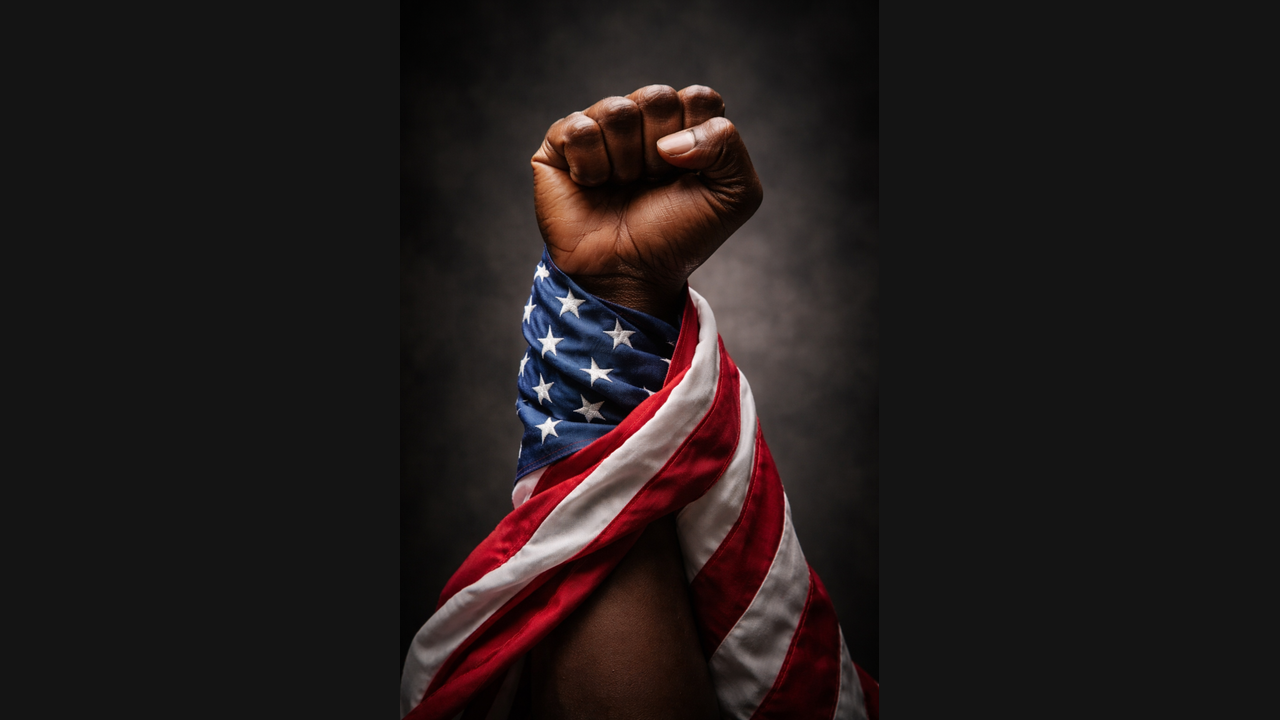
As we close out Black History Month, an important observance born in America through the tireless efforts of Black Americans, it is crucial to recognize a defining trait of our culture: Black Americans will never stay quiet, and they will always stand up for what is right.
Earlier this month, the all-too-familiar “diaspora wars” flared up again on social media. Timelines were flooded with posts and videos highlighting the tension between Black Americans, Caribbean people, and African immigrants. It is a tired conversation that we, as Black people across the globe, need to let go of. We have to understand that dismissing anyone’s Blackness or tearing each other down doesn’t move the needle, and it certainly doesn’t make anyone “more” Black.
However, amidst the noise of the diaspora wars, a necessary realization emerged: the undeniable power, influence, and sheer volume of the Black American voice. It wasn’t until the recent BBC and BAFTA controversy that the global weight of Black American voices became fully apparent. It’s not just that we speak up; it is the staggering numbers behind our voices that force institutions to listen.
When Black Americans felt that the treatment of Michael B. Jordan and Delroy Lindo by British media and award institutions was steeped in disrespect and racism, the collective response was deafening. It forced these UK organizations to immediately rethink how they operate.
To understand why this backlash was so uniquely effective, you have to look at the data. There are roughly 47.4 million Black people in the United States, making up about 14.4% of the total population. In contrast, there are roughly 2.4 million Black British people in the UK, making up just around 4% of the UK’s population.
When you combine our cultural habit of refusing to let things slide with an army of tens of millions of people, you get a force that simply cannot be ignored.
British Black comedian London Hughes explained the impact of this cultural difference. In a recent social media video, Hughes pointed out that the BBC and BAFTA have never felt heat like this before because they are used to dealing with a much smaller demographic that is culturally conditioned to react differently.
“The funny thing to me is that BBC have always played in Black people’s faces, but they were British Black people and we don’t really have the numbers in the UK. We’re like 2%, 3% of the country,” Hughes explained. “As British people, we’re more ‘keep calm and carry on.’ We’ll complain, but we won’t stand on business. Whereas Black Americans stand on business.”
Hughes noted that living in the UK as a non-white person often means getting used to casual racism. She recalled a shocking incident in 2020 when a BBC news reporter used the N-word (with the hard “ER”) on morning television. When Hughes went viral for calling out the offense, the BBC’s response was to ask her to come on their Newsnight platform to debate the slur, an invitation she rightfully refused, saying that “racism is not for debate.”
Because British institutions have historically faced minimal consequences for these offenses at home, they were entirely unprepared for the smoke brought by Black Americans.
“There are things that would perfectly slide in the UK that do not slide in America,” Hughes laughed. “I kind of love them for standing on business in a way that we just can’t… The one thing British people care about is Americans, whether they’re Black, white, or other, and they don’t want the smoke. And they’re getting the smoke.”
With talks of boycotting the next BAFTAs already circulating, real change could be on the horizon. Let this serve as a powerful note as we wrap up Black History Month: our voices matter, our voices are loud, and we have the numbers to back them up.
When we stand on business, the whole world has to adjust.