

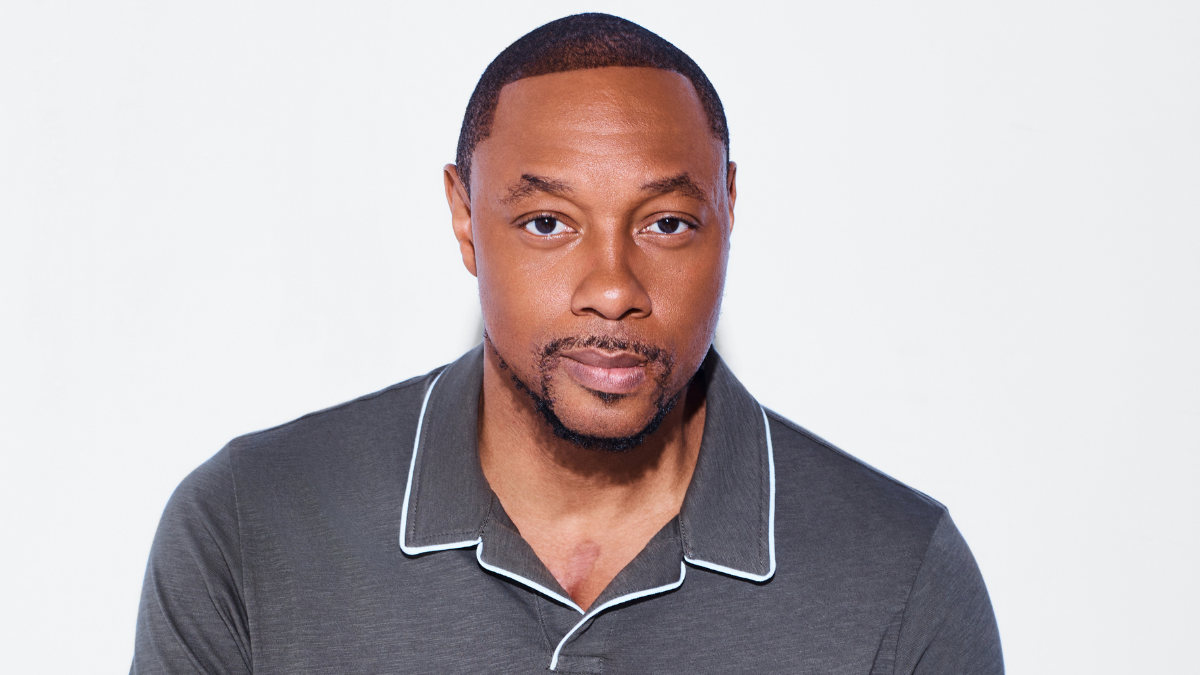
Dorian Missick is no stranger to layered storytelling. You may know him from his roles in Luke Cage, For Life, or most recently in The Burial, where he starred opposite Jamie Foxx in one of 2023’s most engaging courtroom dramas. Now, he’s stepping into the role of Karl Connolly, a weary homicide detective in the upcoming psychological thriller series 56 Days, premiering February 18.
Closely based on the novel by Catherine Ryan Howard, the show follows a seemingly chance romance between two strangers, Oliver and Ciara, played by Avan Jogia and Dove Cameron. Fifty-six days after their whirlwind connection begins, one of them ends up dead, and Karl is one of the detectives unraveling the twisted timeline behind the crime.
Told through intercutting timelines and emotionally charged twists, 56 Days is a high-stakes ride that mixes romance, mystery, and psychological drama.
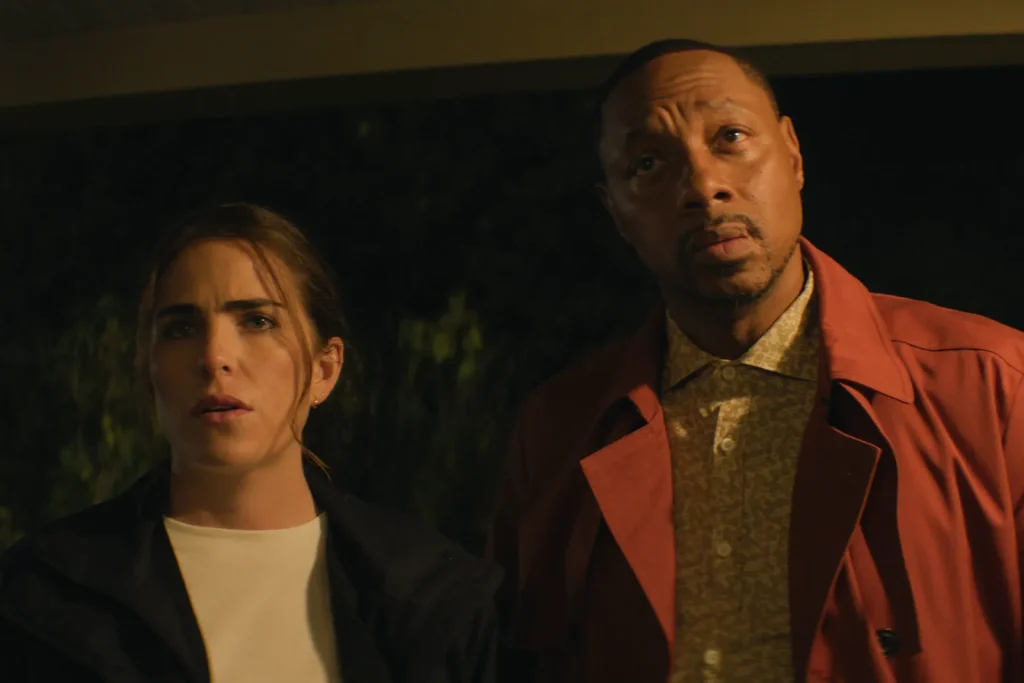
For Missick, 56 Days offered more than just another crime procedural; it gave him a role he could sink his teeth into. Connolly isn’t just a by-the-book investigator; he’s a man at a crossroads, navigating personal turmoil while peeling back the layers of a deeply disturbing case.
We caught up with the actor to talk about stepping into this intricate role, what drew him to the project, his love for psychological thrillers, working alongside Foxx in The Burial, and his thoughts on how storytelling, and Hollywood, are evolving.
[Interview has been edited for length and clarity]
QG: You’ve worked on so many projects, but I loved The Burial. What was it like being part of that cast and working alongside Jamie Foxx?
DM: Man, incredible. Getting to be Jamie’s right-hand man was just something incredible. I had worked with him before, but we didn’t really get to do anything. So being able to go back and forth with him was amazing. I used to joke that he was Morris Day and I was Jerome, it had that rhythm.
We shot in New Orleans right after the pandemic ended. Literally when the world opened back up. Where else would you want to be? And it was a movie where I didn’t have to worry about being in shape or being sexy. These dudes were living a good life. We were eating everything, smoking cigars every night. It was one of the best times I’ve ever had on set in my whole career.
QG: Let’s talk about 56 Days. What was the process like for you getting the role?
DM: It was relatively traditional. I met with the creators and the director. They sent me the script a few days in advance. I read it and knew it was based on a book, so I read as much of the book as I could before the meeting.
We ran through a couple of scenes and talked about the approach to the character. In the book, the character is kind of just there to solve the crime, like a curmudgeonly cop. And that’s fun to play to a certain extent, but I had questions about who this guy really was if the story was going to continue.
I think the same day as the meeting, my manager said, “We just gotta get the deal points together, it’s gonna go.” That almost never happens. But when something is yours, it’s just yours.
QG: Your character, Karl Connolly, feels deeply layered. How did you approach him?
DM: When we meet Karl, we’re under the impression that this might be his last day. He’s had enough. He’s got an ugly situation with his ex-wife, she cheated on him with his brother. On paper, he almost seems like a schmuck.
But I’ve known people who, if you just listed the bullet points of their life, you’d judge them unfairly. What I loved was seeing a guy who does have some self-confidence, but it’s just been shot down. The journey is watching him recapture not only his passion for the job, but his passion for his life.
QG: We’re starting to see a trend with a lot of psychologial thrillers geting made. What are your thoughts on the genre.
DM: I’m a sucker for psychological thrillers. This is my wheelhouse. I love the human mind and human behavior. I’m never satisfied with the simple answer.
People say, “He’s just crazy.” I’m like, no—to him, it made sense. I want to know why. And as an actor, that’s what you do. You pick apart how people think.
What Karl allowed me to do was live that process on screen. The way he investigates is how I investigate characters. Why did this person do this? What was their thinking?
QG: The show plays heavily with time. Was that difficult to track while filming?
DM: Oh yeah, definitely. I had a big whiteboard in my trailer and another one at home. I mapped out the case points and the timeline like a real detective.
Sometimes we’d shoot scenes where there was information my character didn’t know yet, and I had to make sure I played that correctly. But that’s what I loved—it kept me fully engaged every day.
Q
QG: What are your thoughts on awards and accolades?
DM: It’s a tough one because to me it’s like, look, you want your peers to kind of celebrate you, pat you on the back. It’s a good feeling to say, somebody who knows what it takes to do what you do. See what you do and say. You did it well. There’s a value to that. Does it, should it be why you get up out of the bed in the morning? It’s not for me. It’s not why I get out of the bed. But I understand people’s need for that.
QG: Where do you think Hollywood is right now in terms of representation?
DM: I’ve been an actor for years. I’ve been in it. I’ve seen the different phases. I do feel that with more diverse creatives, people behind the scenes, the creators of shows, the writers, the directors and stuff, that we’re able to see a better view of everyone’s life.
Before it was just white old whiter guys kind of control old white men controlling the narrative. We were seen through all lives, all communities that were not old and white, were seen through a certain lens that didn’t always represent us. I looked at it more from that standpoint because I can remember a time being on television and being on like a Law and Order episode, and not being able to use certain slang because they would use dated slang. And you’re like, ‘Yo, like this is crazy, like no one’s says this anymore.’ But because the general audience are older, white people, and they’re just now hearing the slang. So to them it’s new, and you feeling like, ‘Yo man, like honestly to play this guy, he would never, you would never take him seriously if he said that.’
To go from there to now, where it’s kind of like you see all kinds of… I’m learning new things, watching television now, watching films because there are people from all different communities and walks of life telling stories. So to that extent, we’ve seen progress.
Now, the gatekeepers are still are very similar or very much the same people who have always been the gatekeepers, and so there’s gonna come a time when the stuff that gets pushed to the top may not represent what’s all out there. But that’s that’s kind of always been the thing. And I think the beautiful thing about the internet and the way people are consuming entertainment now is you go straight to your audience.
56 Days hits Prime Video on February 18. Check out the full interview below.
Photo Credit: Rowan Daly