

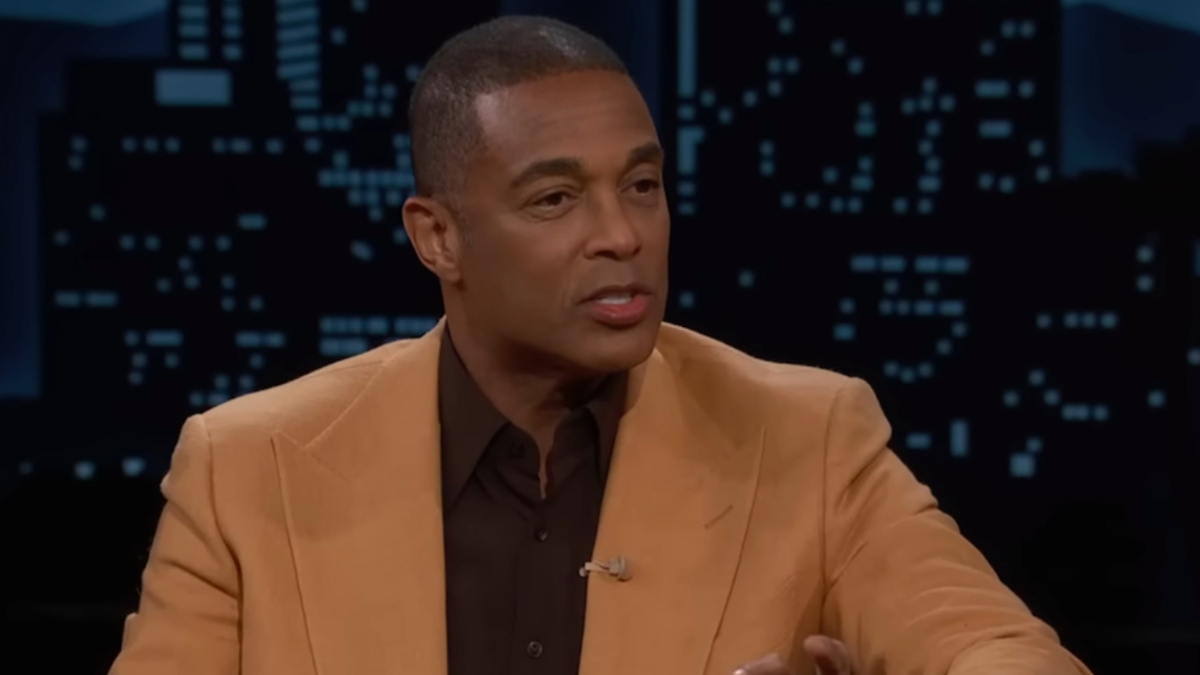
Don Lemon is still processing what happened, but he’s not staying quiet about it. The veteran journalist and digital news host appeared on Jimmy Kimmel Live! and recounted the night he was arrested, describing what he called a deeply unsettling experience that began with him simply doing his job: reporting.
Lemon was taken into custody on January 18 after covering an anti-ICE protest at a church in St. Paul, Minnesota. Protesters had interrupted a Sunday service, and Lemon followed the group inside to document what was happening. “I’m not a protester,” Lemon explained. “I went there to be a journalist. I went there to chronicle, document, and record what was happening.”
The arrest, however, didn’t happen that day. Instead, Lemon said the situation escalated after public calls, including reposts by President Donald Trump, suggested he should be charged and imprisoned. Lemon noted that federal officials began discussing the case publicly, prompting him to hire an attorney.
Jimmy's full interview with Don Lemon after his arrest…
— Don Lemon (@Donlemonbsky) February 3, 2026
Thank you for having me! pic.twitter.com/QyDgIkvaNL
According to Lemon, his legal team even offered what is typically a standard courtesy: that he would voluntarily turn himself in if charges were being pursued. “He’s perfectly willing to self-report, which means turn yourself in,” Lemon said. “So we don’t have to go through this whole rigmarole.”
But Lemon says the Department of Justice never responded. “They never heard back from them,” he told Kimmel, adding that even people accused of far worse are often granted the ability to surrender peacefully. Instead, Lemon says he was arrested unexpectedly on a Thursday night in Los Angeles while in town to cover Grammy weekend events. He described returning to his hotel when he was suddenly grabbed.
“I feel myself being jostled… and people trying to grab me and put me in handcuffs,” Lemon recalled. “And they said, ‘We came to arrest you.’” Lemon said officers initially didn’t show him a warrant until an FBI agent arrived and displayed it on a cellphone. He described the scene as chaotic, with his belongings dropped on the floor as he tried to understand what was happening.
“It had to be maybe a dozen people,” Lemon said, calling it a “waste of resources,” especially given that he had already offered to cooperate.
He believes the arrest was meant to send a message. “They want to embarrass you. They want to intimidate you. They want to instill fear,” Lemon said. Lemon was processed, fingerprinted, and held overnight in a federal holding room. He said he wasn’t granted the traditional “one phone call,” and instead relied on his Apple Watch to try reaching his husband and attorney.
“I asked them, do I get my one phone call? They said, no,” Lemon shared. He described the experience as bizarre and invasive, including being escorted to the restroom under supervision. “They had to come and get me… and stand there while I was peeing,” he said.
Lemon said he didn’t realize how widely the arrest had spread until he saw CNN reporting on it while still in custody. “I could see… ‘Former CNN anchor Don Lemon arrested in Los Angeles,’” he recalled. “He goes, ‘You’ve been on all morning. This is a big deal.’”
When he finally walked out, Lemon said he was stunned by the crowd of reporters, helicopters, and public attention waiting outside.
For Lemon, the ordeal raises larger questions about press freedom, intimidation, and the role of journalism in a tense political era. While he emphasized that not all federal agents treated him poorly, he made clear that the arrest itself felt like something bigger than one incident.
“This is an important time,” Lemon said. “This is not time for folly.”
As Lemon continues to fight the charges, he remains committed to independent reporting and to speaking openly about what he sees as a dangerous precedent. “I’m not going to let them steal my joy,” he said. “But this is very serious.”