

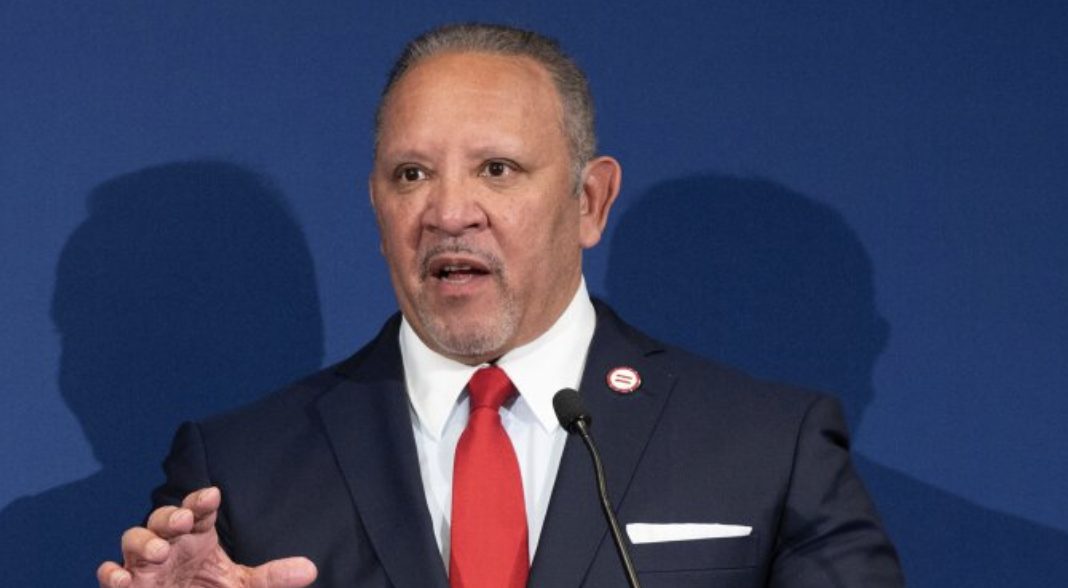
Marc Morial, president of the National Urban League, is pushing back against recent remarks from Donald Trump suggesting that civil rights laws harmed White Americans.
In a recent interview with The New York Times, Trump alleged that civil rights–era policies designed to address systemic racism resulted in White people being “very badly treated.” He pointed specifically to the Civil Rights Act of 1964, which outlawed segregation and race-based discrimination in education, employment, and public life.
“It accomplished some very wonderful things, but it also hurt a lot of people,” Trump said, arguing that qualified individuals were denied opportunities. “People that deserve to go to a college or deserve to get a job were unable to get a job… So it was, it was a reverse discrimination.”
The idea of “reverse discrimination,” that White Americans are victims of racial oppression, has long animated Trump’s political rhetoric.
During his second term, that idea helped guide efforts to dismantle diversity, equity, and inclusion initiatives across federal agencies and within the private sector. Supporters claim these moves are restoring fairness, while critics argue they erase the very context that made civil rights protections necessary in the first place.
Morial falls in the latter camp.
“Every American, regardless of race, color, or creed, is better off as a result of the Civil Rights Movement and the ongoing push for racial justice,” Morial said to USA Today. “Confronting the hard truths about institutional and historical racism is undeniably uncomfortable, and few have benefited more from harnessing that resentment than the current administration.”
For Morial, the suggestion that civil rights protections harmed White Americans misrepresents both history and reality. The Civil Rights Act was enacted to dismantle legally sanctioned barriers that excluded Black Americans and other marginalized groups from basic opportunities, barriers that existed for generations. Its purpose was not to punish one group, but to ensure equal access to education, housing, and employment.
Morial also warned that reframing racial justice as a zero-sum game undermines progress for everyone.
“Those who make false claims about racial justice may think they are protecting their own historical advantages,” he said, “but in reality they’re impeding progress and limiting opportunity for everyone, including themselves.”
Many civil rights leaders believe that backlash against equity efforts distracts from the persistent disparities in wealth, education, healthcare, and the criminal justice system. While the Civil Rights Act helped open doors, advocates say it never fully addressed the cumulative impact of centuries of discrimination.