

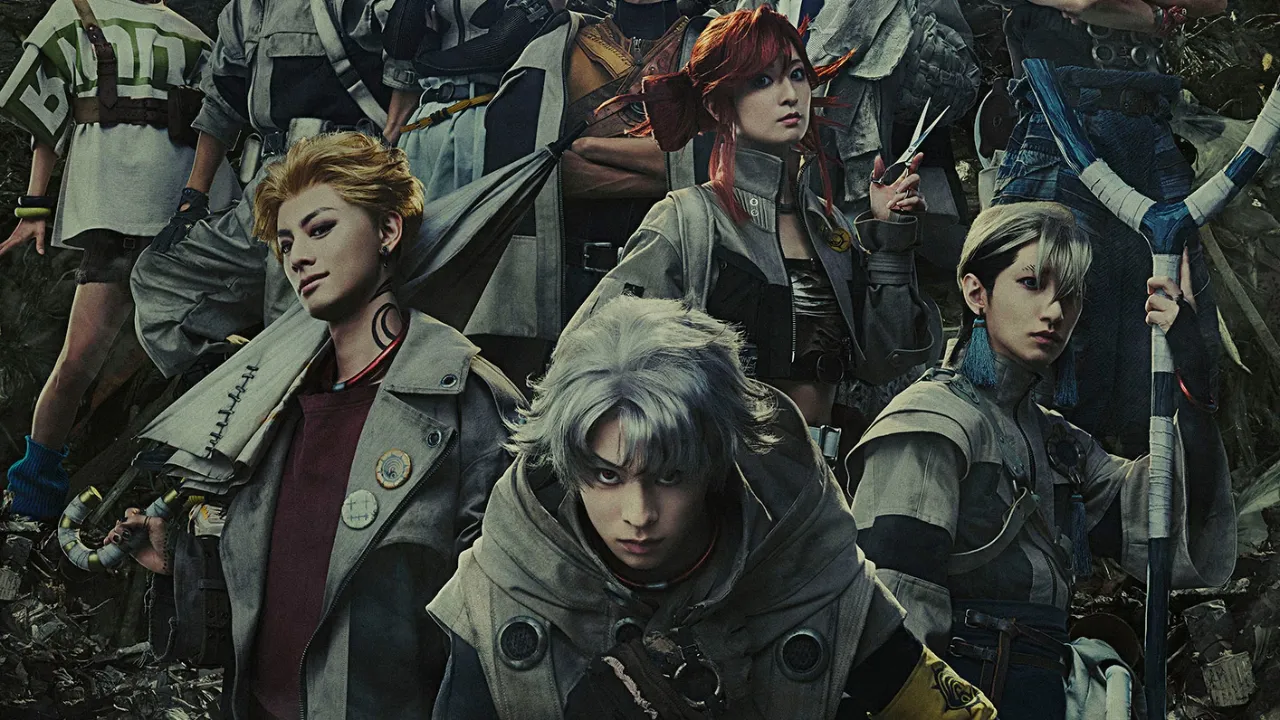
The new anime hotness this season is undoubtedly Kei Urana’s Gachiakuta. Loosely translated, the title means “genuine” or “serious” “trash,” and the story’s underlying message explores how we, as humans, treat the things and people we consider disposable.
That we, as human beings, lose a part of ourselves when we fail to value the things we’re given or own. That disposability isn’t just about objects; it extends to the people we deem valueless as well.
All of this is seen through the perspective of the main character, Rudo. In the story’s world, Rudo is a “tribesfolk,” the most oppressed group in the social hierarchy. When he’s falsely accused of a crime, he’s cast into a Grand Canyon–like pit where all the land’s trash is discarded.
The allegory here largely speaks for itself, but if the creator is speaking through Rudo, his declared hatred for social categorizations and how they devalue humanity rings loud, clear, and true.
So it’s a bit ironic that one of its key cultural adaptations, the Japanese stage play GACHIAKUTA the Stage, has seemingly fallen into the very “trash trap” the story rails against.
There are three darker-toned characters in the story—Corvus, Semiu Grier, and Jabber Wonger—who help to bring depth and richness to the world of Gachiakuta. They are illustrated with darker skin; Grier is voiced by a Black actress in the English dub, and Wonger is depicted with dreadlocks. These three characters are widely interpreted as Black by most fans of the manga and anime.
So it struck many international fans as jarring when the production committee cast two fair-skinned Japanese actors and applied dark makeup to “blacken” them up. It was clearly an instance of blackface that immediately caught audiences off guard.
In 2026, it’s a pretty egregious choice, especially considering there are plenty of Black actors living and working in Japan who speak the language and could have easily stepped into these roles. What makes it even more damning is that Urana herself asked the production committee to avoid doing exactly what they ended up doing.
She explicitly told them that if casting Black actors wasn’t possible, they should still avoid blackface and just run the show without it.
But they stepped on the casting rake, and then doubled down on using blackface, much to the frustration of Gachiakuta fans worldwide.
For their part, the committee released a statement claiming they didn’t intend to discriminate against Black people and that their casting wasn’t based on real-world ethnicity. Which… is such a ridiculously tone-deaf thing to say, especially when the central message of the story is about how society uses minute differences in origin and class to demean and devalue others. Their choice literally goes against the entire ethos of the narrative.
It truly doesn’t take much for young Black people to become cross-cultural ambassadors for dopeness. Part of Black cool stems from our curiosity toward the unfamiliar, the foreign, the “other,” as some would call it. That was the case with anime in the ’90s.
When Cartoon Network launched Toonami, the spaceship that delivered Japanese cartoons to American audiences three decades ago, every Black boy in America became an advocate for action anime like Dragon Ball Z, Yu Yu Hakusho, and Cowboy Bebop.
But unfortunately, love isn’t always reciprocated. Japanese creators aren’t always in tune with the racial dynamics that shape the lives of a key part of their American audience.
This was a chance to, at least in some small way, return that love to Black fans around the world. And the folks behind GACHIAKUTA the Stage absolutely fumbled it.