

Horror has always been a mirror. It reflects fear, power, survival, and the things society would rather not confront. But in 2025, that mirror felt sharper, bolder, and more inclusive than ever.
Horror is no longer just about fear; it’s about perspective. And in 2025, the genre proved its strongest when it embraced voices that have historically been pushed to the margins.
This year didn’t just deliver jump scares and box office numbers; it marked a turning point for the genre. Horror in 2025 proved that audiences are hungry for stories with substance, symbolism, and perspective. And notably, Black storytelling didn’t just show up in horror this year; it dominated, reshaped, and elevated it.
What makes 2025 truly special isn’t just the quality of these projects; it’s the shift in who gets to tell horror stories and how those stories are received.
From prestige thrillers to legacy franchises and ambitious series, these are The Quintessential Gentleman’s Top 5 Horror Projects of 2025.
Sinners
No project defined horror in 2025 quite like Sinners.
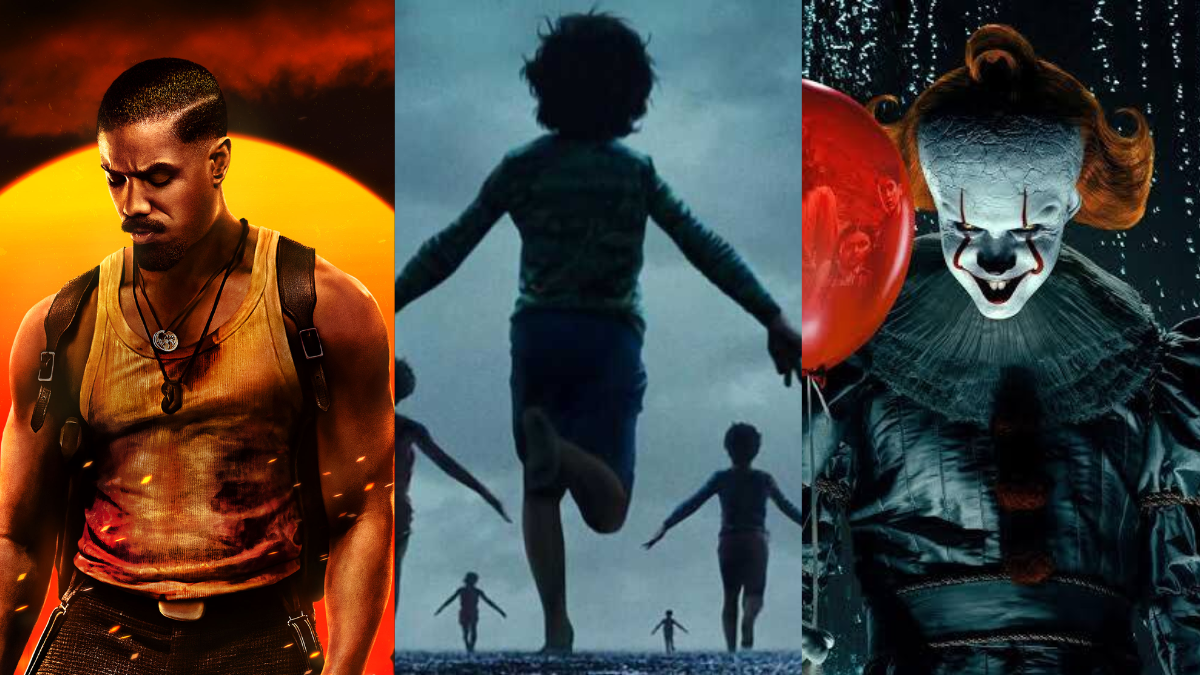
Ryan Coogler’s postwar political thriller didn’t just scare audiences; it unsettled them in the best way possible. Mixing horror, history, and psychological tension, Sinners redefined what genre storytelling can look like when it’s rooted in trauma, legacy, and moral reckoning.
Michael B. Jordan’s dual performance as twins Smoke and Stack anchored the film emotionally, while Coogler’s direction transformed dread into something intimate and political. The result was a film that lived in your head long after the credits rolled.
The accolades tell the story. Sinners swept the African American Film Critics Association Awards with eight wins, including Best Film, Best Director, Best Writing, Best Actor, and Best Ensemble. It has become a major awards-season contender and a rare horror film embraced equally by critics, audiences, and awards bodies.
More importantly, Sinners represents the continued success of Black-led horror that isn’t confined to metaphor; it confronts history head-on. This is horror as art, horror as commentary, and horror as cultural force.
Weapons
Zach Cregger’s Weapons is one of 2025’s most ambitious horror mysteries, a film that uses fear not just to shock, but to interrogate how communities respond when the unthinkable happens.
The story begins with a chillingly simple premise: in a quiet Pennsylvania town, seventeen children from the same classroom mysteriously vanish at exactly 2:17 a.m., leaving behind only one boy, Alex Lilly. From there, the film unfolds as a non-linear puzzle that gradually reveals the emotional fractures beneath suburban normalcy.
What distinguishes Weapons from many mainstream horror entries is its multiple-perspective structure, which follows characters like Justine (Julia Garner), a teacher grappling with suspicion and grief; Archer Graff (Josh Brolin), a devastated parent; a flawed police officer (Alden Ehrenreich); and the town’s principal (Benedict Wong) as they each attempt to make sense of the disappearances.
Rather than staying confined to a single viewpoint, the film weaves these narratives together, allowing the story’s dread to build chapter by chapter — much like piecing together a mosaic, where each fragment adds unsettling meaning.
Weapons mixes eerie supernatural elements with sharp psychological tension and dark humor, creating a tone that can be as unsettling as it is smart.
At its heart, the film examines something deeper than who or what caused the disappearances: it looks at how fear and grief fracture communities, how blame and suspicion can spread like contagion, and how unresolved trauma can alter the way people see each other.
Weapons doesn’t just ask you to be scared; it asks you to wonder why the horror feels so familiar, so close to real life. That layered approach, horror as metaphor and mood, not just mechanics, makes this Cregger’s strongest follow-up yet to Barbarian.
From its haunting mystery to its unpredictable narrative twists, Weapons shows that great horror doesn’t just reveal what’s lurking in the dark, it reveals what’s lurking in us.
3. The Conjuring: Last Rites
With The Conjuring: Last Rites, the franchise returns to what made it iconic in the first place: atmosphere, faith, and the quiet terror of believing something evil has already won.
Rather than trying to outdo its predecessors with bigger demons or louder scares, Last Rites feels intentional, almost reverent. The film understands that the most effective horror in The Conjuring universe has always lived in anticipation, not excess.
This final chapter leans heavily into mortality, spiritual exhaustion, and legacy. Ed and Lorraine Warren are no longer just investigators; they are witnesses to the toll a lifetime of confronting evil takes on the body and the soul. That weariness adds emotional weight to every possession, every exorcism, every whispered prayer.
The scares themselves are classic Conjuring: doors that shouldn’t move, shadows that linger too long, silence that feels aggressive. But what elevates Last Rites is its pacing. The film trusts the audience. It lets scenes breathe. It allows dread to seep in slowly instead of forcing it.
There’s also a notable shift in tone. Last Rites feels more somber, more reflective, less about defeating evil and more about surviving it. The idea that faith isn’t always triumphant, but necessary, grounds the film in something deeply human.
Visually, the film returns to candlelit rooms, tight framing, and practical effects that feel tactile rather than digital. The horror feels close. Personal. Unavoidable.
As a franchise closer, The Conjuring: Last Rites succeeds because it doesn’t chase nostalgia; it honors it. It understands that what made The Conjuring resonate wasn’t just demons or jump scares, but the emotional cost of standing between evil and the people it wants to consume.
4. It: Welcome to Derry
didn’t just expand Stephen King’s universe, it reframed it.
What set the series apart was its deliberate choice to center the story around a Black family navigating Derry’s long, cursed history. That decision alone shifted the emotional weight of the narrative, grounding the horror in lived experience rather than abstraction.
By placing a Black family at the heart of the story, Welcome to Derry tapped into themes that horror has always flirted with but rarely explored from this perspective: inherited fear, generational trauma, and the feeling of being unsafe in places that insist nothing is wrong.
The series balanced classic It mythology with a fresh lens, allowing moments of terror to feel both familiar and newly unsettling. Watching this family confront not only a shape-shifting monster, but also the unspoken dangers of their environment, added layers of tension that hit deeper than jump scares ever could.
For Black audiences in particular, Welcome to Derry felt overdue. Horror has long relied on Black pain as background texture or disposable stakes. Here, Black life, love, and survival are central, not expendable. The family isn’t there to be traumatized for shock value; they are the emotional backbone of the series.
In doing so, It: Welcome to Derry proved that representation doesn’t dilute horror, it intensifies it. This wasn’t just a prequel.
It was a recalibration of who gets to survive, and whose stories deserve to be told in the dark.
5. Good Boy
Good Boy is proof that horror doesn’t need spectacle to be devastating; sometimes, all it takes is loyalty.
At first glance, the indie film looks deceptively simple: a man, his dog, and a quiet, isolated environment. But Good Boy quickly reveals itself as one of the most emotionally unsettling horror experiences of the year by flipping perspective and placing the audience inside the mind of a dog who senses that something is deeply wrong.
Told largely through the eyes of Indy, a devoted retriever, the film weaponizes innocence. Indy doesn’t understand the full scope of what’s happening around him, but he feels it. The tension builds not through gore or jump scares, but through intuition, confusion, and fear. We know more than Indy does, and that gap becomes unbearable.
What makes Good Boy hit so hard is how it plays with trust. Dogs are hardwired to protect, to stay, to love unconditionally. The film asks an uncomfortable question: what happens when loyalty becomes a trap?
Director Ben Leonberg leans into restraint, allowing silence, stillness, and body language to do the heavy lifting. The horror lives in moments where Indy hesitates, whines, or refuses to leave his owner’s side, even when every instinct is telling him to run. It’s slow-burning horror at its most effective, rooted in empathy rather than shock.
There’s also something quietly radical about a horror film that centers on care instead of cruelty. Good Boy doesn’t exploit the animal for cheap scares. Instead, it honors the emotional intelligence of dogs, making the audience feel every choice, every moment of hesitation, every act of protection.
By the time the film reaches its most harrowing moments, the fear isn’t about what will happen, it’s about whether love alone is enough to survive it.