

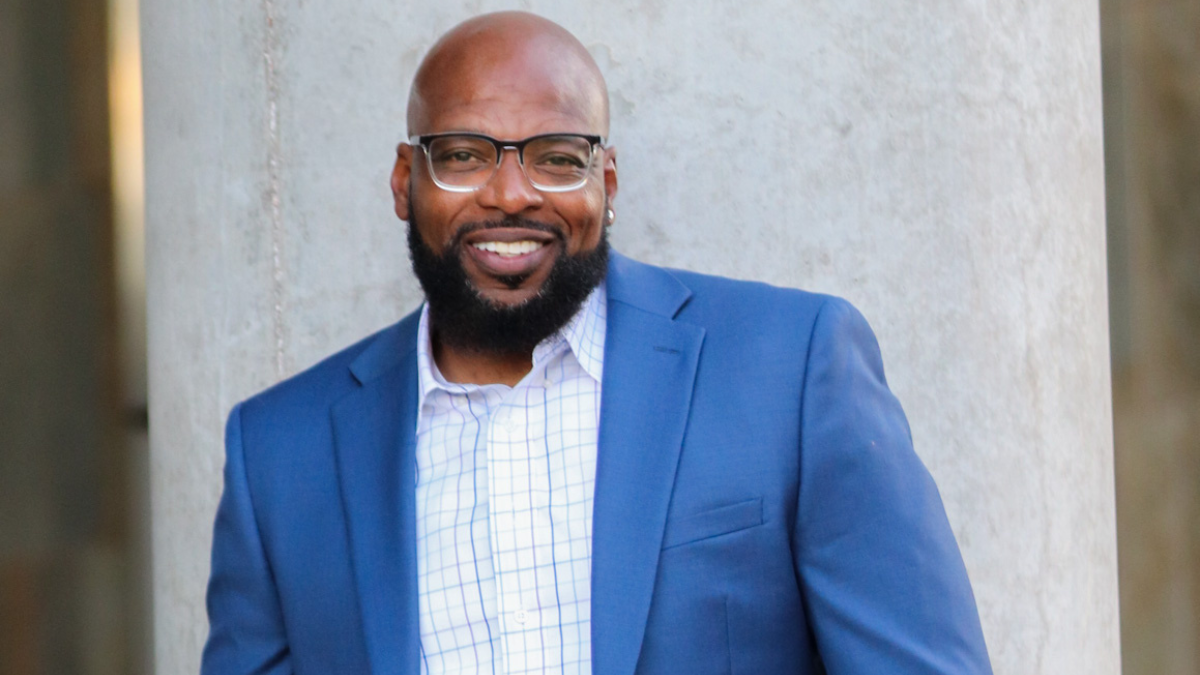
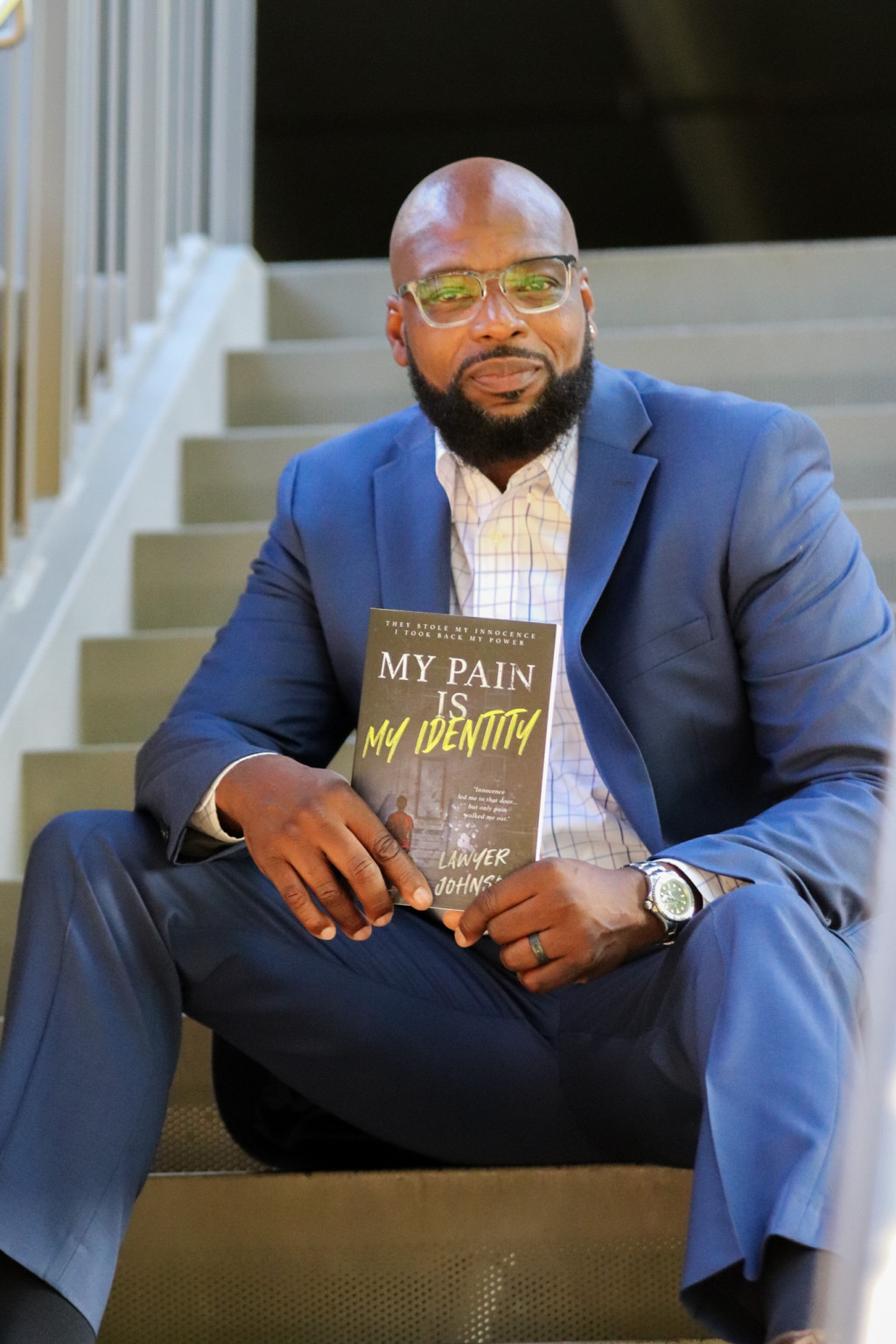
Lawyer Johnson has lived many lives: a childhood survivor, a street hustler, an incarcerated young man, an entrepreneur, an author, and now a voice of healing for people who have carried silent wounds for far too long. His debut memoir, My Pain Is My Identity, released November 28, chronicles that journey.
At first glance, Johnson is the picture of confidence and calm. But behind that strength lies a story shaped by childhood sexual abuse, years of instability, and a path through incarceration that could have defined him forever. Instead, he transformed it.
My Pain Is My Identity is more than a memoir; it’s a testimony about what happens when trauma is confronted head-on, when silence is broken, and when a wounded child becomes a healed man with purpose.
The book traces Johnson’s early years in Newburgh, New York, where his innocence was stolen at seven. It follows his move to the housing projects of Goldsboro, North Carolina, where violence surrounded him, and later to the crack-era streets of Brooklyn, where pain turned to rage and survival became his full-time pursuit.
That path eventually led him to Rikers Island and prisons in North Carolina. But those same cages became the place where he learned forgiveness, discipline, and the first steps toward healing.
Today, Johnson is a thriving entrepreneur and a motivational speaker who uses his story to inspire men and young people across the country. His memoir explores the journey from shame to ownership, from silence to storytelling, and from trauma to transformation.
Below, Johnson opens up about his childhood, forgiveness, faith, manhood, incarceration, and why My Pain Is My Identity could only be written now.
When you look back at your early years, what experiences shaped the man you would later become, even before the trauma and challenges?
Even before I understood trauma, my early life taught me resilience. Growing up in Brooklyn shaped me with lessons about survival, awareness, and emotional toughness. I watched my mother carry heavy responsibilities while still giving us love. I learned discipline from my environment and empathy from watching people’s struggles. Even as a child, I felt God’s hand guiding me, even when I didn’t understand the purpose behind the experiences. Those early years planted the seeds for the man I would eventually become.
At what point did you realize that the pain you carried wasn’t just something to survive, but something that would eventually shape your purpose?
I realized my pain had purpose the moment I started speaking about it and watched others respond with honesty, tears, and relief. People opened up about their own stories in ways they never had before. That was when it clicked for me — surviving was only the beginning. Sharing was where the purpose lived. When your truth helps someone breathe a little easier, you understand that the suffering wasn’t wasted. It was molding you for something bigger.
Your memoir is titled My Pain Is My Identity. What does that phrase mean to you in this season of your life, after healing, growth, and transformation?
Today, My Pain Is My Identity means ownership. Not denial, not secrecy — ownership. It represents the strength I gained from my struggles and the courage to no longer hide from my truth. My identity isn’t defined by the trauma, but by the resilience and faith that carried me through it. I’m standing boldly in the very truth that once held me captive.
You’ve spoken openly about childhood sexual abuse. What was the moment you knew you had to confront that trauma instead of suppressing it?
The moment came when I realized silence was still controlling me. I was a grown man with a family, a business, and responsibilities — but the little boy inside me was still wounded. When I started speaking at the Durango Juvenile Detention Center in Phoenix, Arizona, and working with youth fighting their own internal battles, I knew I couldn’t guide them with only half of my truth. I had to confront my trauma because I wanted freedom, and I wanted them to know healing was possible, too. Suppression is survival. Confrontation is healing.
You’ve said that “healing is possible through faith, forgiveness, and growth.” What did forgiveness look like for you, especially when the pain comes from people who should’ve protected you?
Forgiveness for me wasn’t saying, “It’s okay.” It was saying, “You no longer have power over me.” Through faith, I learned that forgiveness is not excusing the harm — it’s releasing its grip on your spirit. I didn’t forgive to free the people who hurt me. I forgave to free myself. That decision gave me permission to move forward into the man I was supposed to become.
You rebuilt your entire life after incarceration. What was the turning point that shifted your mindset while you were inside?
My true turning point came the day I saw my mother on visitation after being on the run for three years and finally receiving my time. We were in an open visitation room — no glass between us — and I saw pain in her face that I had never seen before. She couldn’t look at me directly, and that alone broke me. My mother and I have always been extremely close, so when she avoided my eyes, I knew it was fear. Fear that something might happen to me. Fear of losing her son.
I had to look her in the face and tell her, “I’m okay. I’m sorry. I’m going to get my act together.” Seeing the tears fall from her eyes shattered my heart into pieces. That moment forced me to confront the damage I had caused — not just to myself, but to the person who had given everything for me.
It wasn’t the prison walls that changed me.
It was seeing my mother’s heart breaking because of my choices.
From that day forward, something shifted inside me. I knew I had to change — for her, for myself, and for the man God intended me to be.
How did you begin rebuilding your identity once you were released, especially when the world may have been quick to label you by your past?
I rebuilt my identity through consistency, discipline, and purpose. I didn’t waste time trying to convince people of who I was becoming. I let my actions speak for me. I chose work over excuses, faith over fear, and growth over pride. Identity isn’t rebuilt through noise — it’s rebuilt through transformation lived out loud.
Why was now the right time to write My Pain Is My Identity?
Because I’m healed enough now to tell my story without bleeding through the pages. I wanted to write from a place of clarity, strength, and understanding. Society is finally becoming more open to hearing authentic stories from Black men confronting trauma, faith, masculinity, incarceration, and transformation. God showed me this was the time, and I trusted that direction.
What do you hope Black men, specifically, take away from your story?
I want Black men to know that vulnerability is strength. Healing does not make you weak. Speaking up does not strip away your masculinity. We have carried pain silently for generations. If my story helps even one man say, “This happened to me, but it won’t define me,” then I’ve fulfilled part of my purpose.
You often say that “our scars can become someone else’s survival guide.” When did you first realize you were meant to lead and mentor others?
I realized it the moment people began opening up to me after hearing my story. When men cried, when youth spoke for the first time, when people said my words gave them courage — I knew leadership wasn’t something I pursued. It was something I was chosen for. My scars became assignments. And in those moments, I understood God didn’t just save me — He positioned me.